If you’re looking to get company-branded sweaters for your employees, snazzy jerseys for your team, or custom shirts for your church group, how you get your swag printed can make all the difference in the world. Among other things, it can change how the fabric feels, how it looks, how long it lasts, and how much it can cost to print.
Two popular methods for printing custom branded apparel are vinyl transfers and screen printing. If you don’t know much about either option, choosing between them can be rather difficult. So let’s go over the main differences and how you can choose between them for best results.
At a Glance
| Screen Printing | Vinyl Transfer | |
| Ink longevity | Long lasting, with ink that’s absorbed into the fabric fibers, creating a more permanent finish. | Long lasting, but can start to crack and lift if the fabric is stretched or if the design is in an area with high friction. |
| Hand feel | A softer feel due to the ink absorbing into the fabric. | Can feel harder depending on the thickness of the vinyl. |
| Labor required | Longer setup is needed for multi-colored designs; requires a different screen to be set up for each color. | Easy setup; each color is cut from a new piece of vinyl and layered, and multiple colors can be heat-pressed at the same time. |
| Cost effectiveness | Cost effective for larger quantities and bulk designs. | Cost effective for smaller quantities and personalized items. |
| Color options | Screen printing allows for color blending and more complex images can be produced; though fewer overall colors. | Colored layers cannot blend. Limited to the colors of vinyl available. |
Methodology
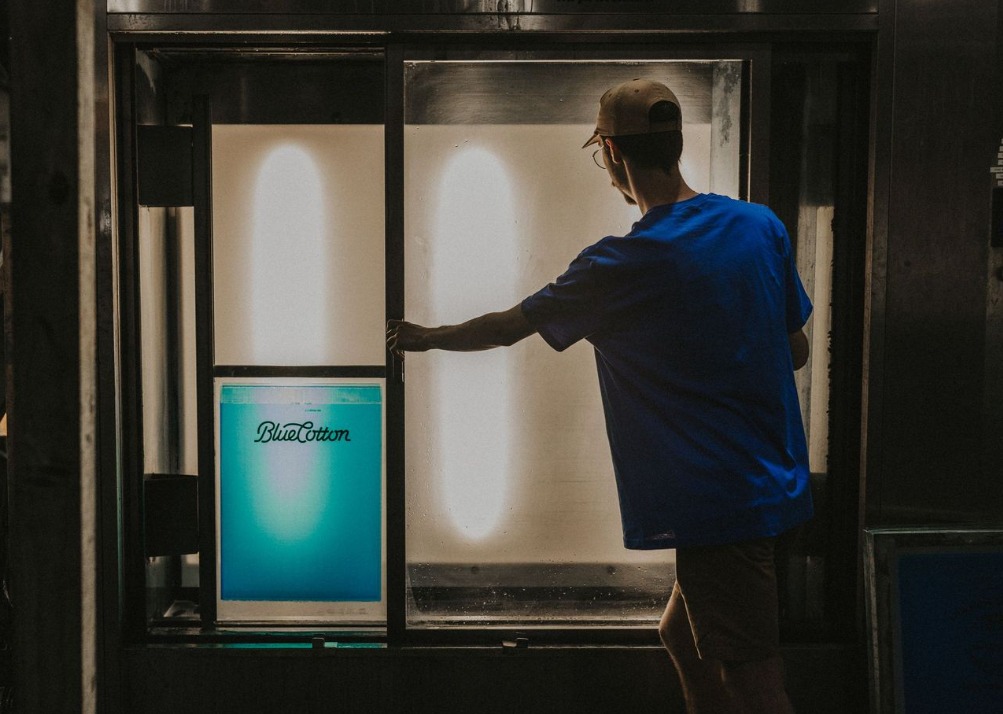
Screen printing is an older technique than vinyl, with its origins dating all the way back to 10th century China. It uses an emulsion liquid that’s applied to a mesh screen and processed through ultra violet light. The emulsion hardens, and then the unexposed areas will let the ink pass through when printing. This leaves behind the design in the areas that were not exposed to the light, and the emulsion is washed away from these areas.
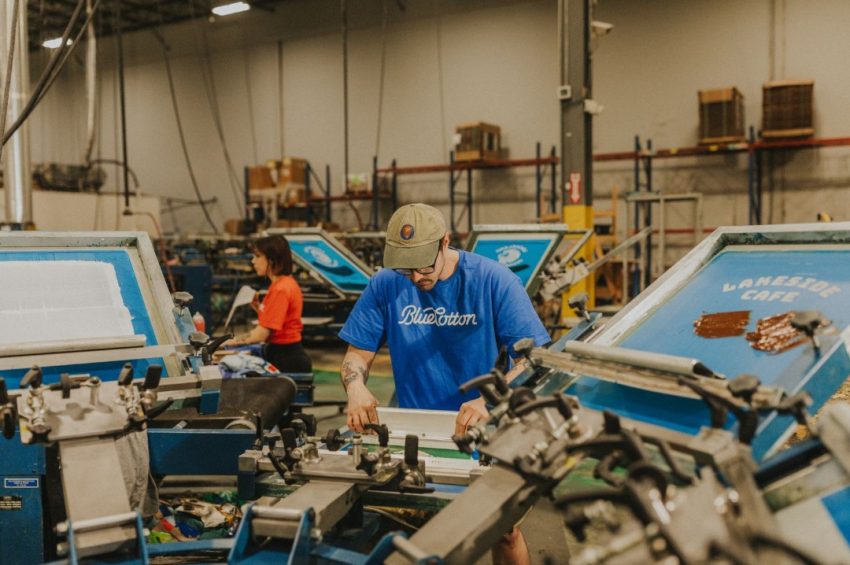
The screen is then placed on the item to be printed, such as a T-shirt. The desired color ink is applied, dried and cured, leaving behind a permanent design. Note that with screen printing, each color has to be applied separately, so each color of the design has to have its own screen.
Vinyl transfers are often referred to as heat transfer vinyl (HTV). In this technique, a die cut machine cuts the vinyl sheet using a computer-generated stencil or cut file. The excess vinyl is then removed from the sheet, leaving behind the design.
This design is then lifted using a sticky vinyl transfer tape and applied to the garment and secured with a heat press or iron. Like screen printing, each color is applied separately, layered using different colors of vinyl. Though, if the colored layers don’t overlap, it’s easy to heat press all of the colors at the same time
Durability and Quality
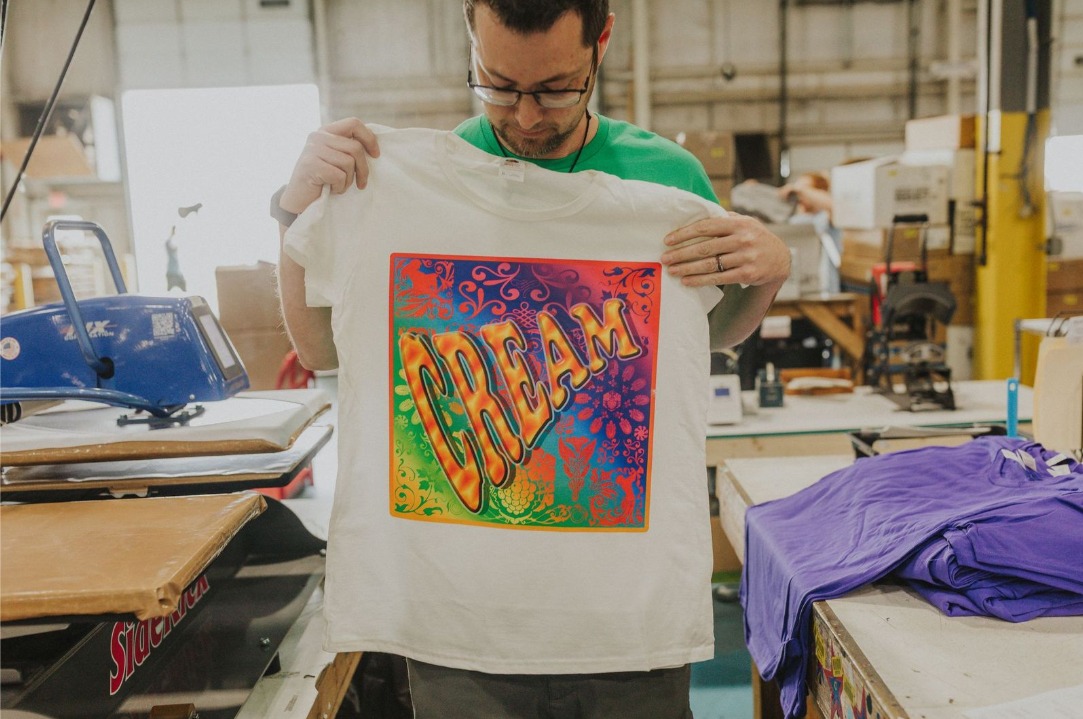
Both vinyl and screen printing offer a permanent adhesion to the surface they’re applied to and, when washed with care, can last for years.
However, T-shirts and bags that have areas with high friction can cause vinyl prints to crack and lift at the edges due to stretching and use over time. This is because vinyl lays on top of the fabric through the permanent adhesive and bonded through heat. Screen printing is slightly more durable since the ink is absorbed into the fabric.
When it comes to quality and hand feel, vinyl can feel rather “plastic” on top of the fabric (depending on the thickness of vinyl). Vinyl is also less breathable since it sits as a layer on top of the fabric. Screen printing, on the other hand, has a softer feel, which is why items like athletic clothing are usually better suited for screen printing.
Cost Efficiency
Vinyl printing has a lower upfront cost than screen printing. That’s why many small businesses use their own vinyl printing setup with an inexpensive die cut machine. However, it can become costly since the heat pressing process can take lots of trial and error. Once you get everything figured out, the cost drops drastically.
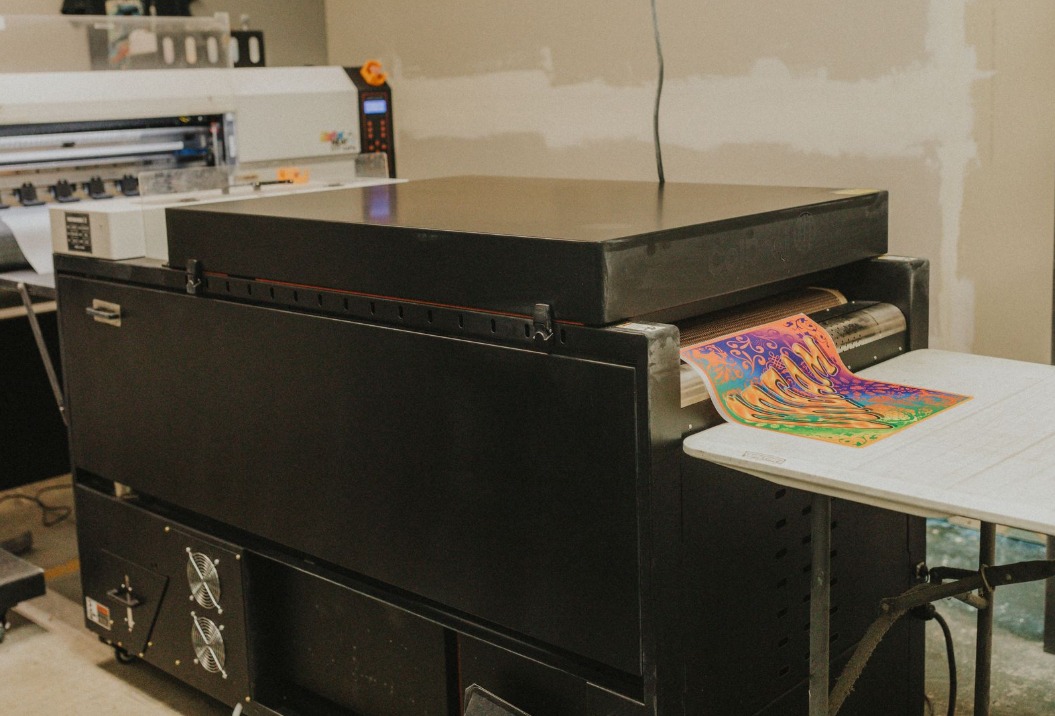
It also takes much less time to set up a design and print it than it does when screen printing — once a design is cut, it can be pressed onto a T-shirt within a few minutes, making vinyl ideal for rapid turnaround for smaller orders. That’s also why vinyl is most often used for names and numbers on the back of sports shirts — since each one is different, it would take forever to screen print them. But even though this is the best use case for vinyl today, this method is quickly being replaced by direct to film applications.
Screen printing has a much higher upfront cost due to the equipment involved. It also takes an hour or two to set up the screens and design. However, once you have the equipment prepped and ready, it can go for hundreds to thousands of units without issue — drastically outpacing vinyl. This is also why it’s not a great use case for just a handful of 5–10 shirts; when you’re spending one to two hours setting up the design just for a small order, the process becomes very inefficient.
Colors and Design Complexity
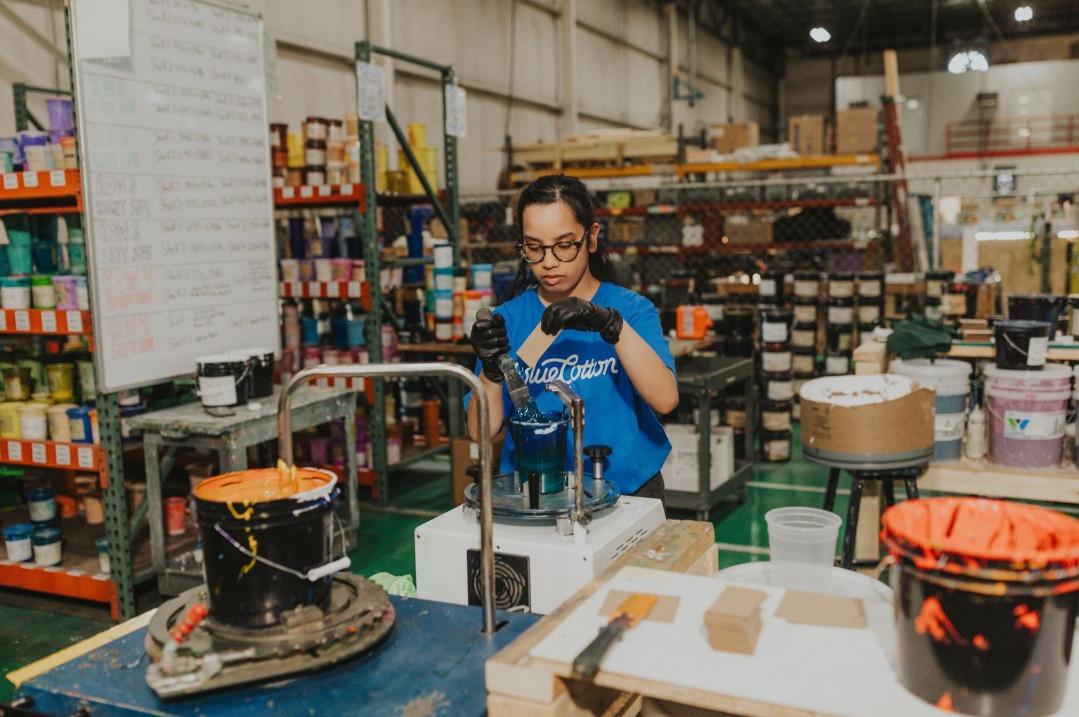
In terms of design complexity, this is a bit of a mixed bag.
For example, screen printing is able to produce gradients and soft color shifts through halftones, which are tiny dots in the design that make up that shift in color and blend together. Trying to do a halftone pattern in vinyl would be a complex cut and very time consuming process, since the dots are very small — the die cut machine would have to cut every single tiny circle. It is also difficult to weed the vinyl (take away the excess vinyl from the design) without lifting these dots.
Also, if your design has complex lines, it can be trickier to get these details in vinyl versus screen printing because of how thick the vinyl can be. As a result, layering these designs can get difficult and time consuming to navigate. With screen printing, you are able to get complex details into the design and layer them easier.
However, one of screen printing’s biggest limitations is how many colors you can use in one design. Most presses can only hold six to eight colors, severely limiting design complexity. At BlueCotton, we have a 16-screen press, but this isn’t very common in the industry.
Which One Is Best, Screen Printing or Vinyl?
Vinyl and screen printing are both great options; deciding between the two will often come down to how complex your designs are, how many prints you want, and how much you can afford.
If you need a small batch and don’t mind a design that feels distinctly separate from the garment, vinyl can work just fine. But when you need larger quantities, longer durability, and a design that’s truly part of the fabric, screen printing is the better option.