If you’ve never placed a custom apparel order, a bunch of white shirt blanks on a screen can all look the same, with brand names you’ve never heard of. And when you’re purchasing several shirts at a time for a group or event, it feels like a high-stakes purchase on an item that can’t be returned!
So how in the world are you supposed to know which one has the fit and feel you’re looking for?
I ran into this problem recently when my sister-in-law was creating a group order for a special event. She described the kinds of shirts she wanted, and one of our representatives sent over suggestions… but despite getting a clear rundown of all the different kinds we have in stock, she was still unsure which one would be best.
When she called me with this question, it became very clear to me that this wasn’t a one-time issue. This had to be a question that the majority of our customers face when placing an order. Even I — who knows my sister-in-law well, her style and preferences, and even most of the people who would be wearing the shirts — was nervous that I would misinterpret her vision and suggest the wrong thing!
That’s when I set out on a mission to educate our customers and help them be better informed on the different products we offer so that they can feel more confident when placing a custom order.
So today, let’s go over common terms you’ll see in product descriptions, the types of fabrics used in shirts, and even some examples of comparable retail styles. By the end, you’ll feel confident in knowing exactly which products to choose the next time you place a custom order.
The Basics of T-Shirt Fabrics: Content vs. Construction
Before we dive into the different types of T-shirt fabrics, it’s important to understand the difference in fabric content vs. construction.
Fabric content tells you what the shirt is made of, such as 100% cotton, cotton/polyester blend, rayon, tri-blend, and 100% polyester. This affects the breathability, heat management, stretch (or lack of), and how the garment will react to washing and drying. You can think of fabric content like ingredients in a recipe, with each ingredient bringing a different quality like softness, durability, stretch, or performance.
However, the ingredients alone won’t tell you how good the finished dish will taste. That’s where construction comes in.
Fabric construction is how the fibers of the garment are spun, treated, or woven. This is what affects the softness of a garment, overall durability, quality over time, print quality, the way it drapes on a body, and the “premium” feel. Because it makes such a major difference in the end result, you can have two garments with the exact same fabric content but feel completely different — they might be ring-spun, open-end yarn, combed cotton, uncombed cotton, jersey knit, interlock knit, lightweight, heavyweight, or airlume.
Putting Them Together
When you’re responsible for ordering a bunch of custom shirts, you want to understand your options and what they mean! Knowing the fabric content and construction of garments allows you to
- Set the right expectations for your group for feel and fit
- Avoid surprises when the shirts arrive
- Get the best results for your design
- Ultimately select the right garment for your group!
Here’s an easy breakdown to help you remember fabric content and construction, as well as how each one affects the final product.
| Category | Fiber Content | Fabric Construction |
| What it is | The raw materials used to make the shirt | How those materials are spun, treated, and knit |
| Think of it as | Ingredients in a recipe | The cooking method |
| Examples | Cotton, Polyester, Rayon | Ring-spun, combed, airlume, jersey knit |
| What it affects most | Breathability, stretch, moisture control, warmth | Softness, smoothness, durability, drape |
| Controls softness? | ⚠️ Partially | ✅ Mostly |
| Controls stretch? | ✅ Yes | ⚠️ Some |
| Controls durability? | ⚠️ Some | ✅ Yes |
| Controls print quality? | ⚠️ Some | ✅ Yes |
| Why it matters | Determines the type of fabric | Determines the quality and feel of that fabric |
Choosing the Right Fabric for Your Order
Have you ever bought a shirt online, and it wasn’t what you expected? Maybe you ordered a shirt that looked like it had the cooling and slick feel of a Nike Dri-fit shirt, but instead it felt like cotton?
Even if you ended up liking it in the end, these mismatched expectations can ruin the entire experience. Taking the time to understand fabric content can avoid issues like these and result in more consistently satisfying purchases.
100% Cotton
These are the most familiar tees in the industry. Cotton is known for its classic feel and everyday wear, it’s comfortable, and it’s great for screen printing. However, cotton can wrinkle easily and will shrink if not pre-shrunk prior to construction.
Cotton tees are good for just about any group or occasion, whether they’re for an event, church ministry, or even branded merch.
100% Polyester
Polyester is a synthetic fiber that’s exceedingly common in performance tees (a popular example is the Nike Dri-FIT tee). It’s made to pull moisture away from the body, keeping you cool in warm temperatures and warm in cold weather. There’s also no shrinking with polyester, and tees made from it typically last a long time!
We love 100% polyester tees for outdoor teams like landscapers, road crews, and construction workers. It’s also great for gym merch, team spirit wear, and everything from 5ks to marathons!
Cotton/Polyester Blends
Cotton/polyester blends are the go-to for a more lightweight tee. These blends come in 50/50 cotton/poly and 60/40 cotton/poly, and they represent the best of both worlds.
For example, many of our customers come to us asking for a cotton/poly blend because they don’t shrink as much as 100% cotton tees but still have a softer feel — not to mention they’re an economical alternative to tri-blends.
Cotton/poly blends are good for volunteer shirts for any outdoor event, casual company uniforms, or giveaways to increase your brand awareness.
Tri-blends
When you think of the softest T-shirt you’ve ever felt or worn, you’re most likely thinking of a tri-blend tee. These garments include cotton, polyester, and rayon for the most buttery and premium feel. They tend to flatter just about any body style: their slight stretch and lightweight fabric help the drape of the garment and its recovery.
While tri-blends commonly have a slightly heathered tone due to mixed fabrics, more and more brands are offering solid colors. Also, this premium style does come at a cost, which is why tri-blends are more expensive than 100% cotton or cotton/poly blends.
They’re perfect for lifestyle brands and boutique merchandise, but we also like them for companies that enjoy casual days but want an elevated look. Simplified designs work best here.
Fabric Content Reference Guide
Labels will inform you on fabric content. Keep this chart in mind when you read labels.
| Label You See | What It Means for You |
| 100% Cotton | Natural, breathable, classic feel |
| 50% Cotton / 50% Polyester | Softer, more durable, less shrinkage |
| Tri-Blend (Cotton/Poly/Rayon) | Ultra-soft, lightweight, fashion-forward |
| 100% Polyester | Moisture-wicking, performance-focused |
How Construction Impacts Shirt Feel & Fit
You already know that the perfect tee isn’t just about the contents but also the construction. After all, two 100% cotton shirts can feel completely different, so you need to know what to look for if you want to be sure you have the right option.
Open-Ended Cotton
Open-ended cotton is the process of spinning the yarn quickly and loosely, resulting in a heavier, more rigid feel. As such, it’s used for garments designed to be efficient and durable.
Ring-Spun Cotton
Ring-spun cotton is the process of spinning the cotton slowly and tightly, creating a finer, softer, smoother yarn. These garments feel broken in from the first wear.
Combed Ring-Spun Cotton
Combed ring-spun cotton takes ring-spun cotton to the next level by combing the fibers before the yarn is spun to remove short and uneven fibers. From there, the cotton is ring-spun with a slow and tight spin. This extra step adds an even softer feel to the finished garment.
Airlume Combed & Ring-Spun Cotton
Airlume combed and ring-spun cotton is the crème de la crème of cotton. After the cotton is combed and ring-spun, this process adds one more step that thoroughly cleans the cotton before spinning. All imperfections and tiny particles are removed, resulting in the softest, purest form of cotton that creates a smooth and lightweight garment.
Jersey Knit
Jersey knit is a construction that knits together fabric with a series of loops — similar to the way sweaters are made. This one continuous set of loops creates a soft shirt with natural stretch that moves with your body. If you’ve worn a classic T-shirt, you’ve worn a jersey knit.
Fabric Construction Reference Guide
Here’s a chart for quick reference to ensure you’re selecting the right shirt for your order.
| Term You See | What It Changes |
| Open-Ended Cotton | Heavier, rigid, durable feel |
| Ring-Spun Cotton | Softer, smoother yarn |
| Combed Ring-Spun | Removes short fibers for a cleaner feel |
| Airlume Combed & Ring-Spun | Ultra-clean, premium softness |
| Jersey Knit | Flexible, everyday T-shirt fabric |
Choosely Confidently with Real Examples
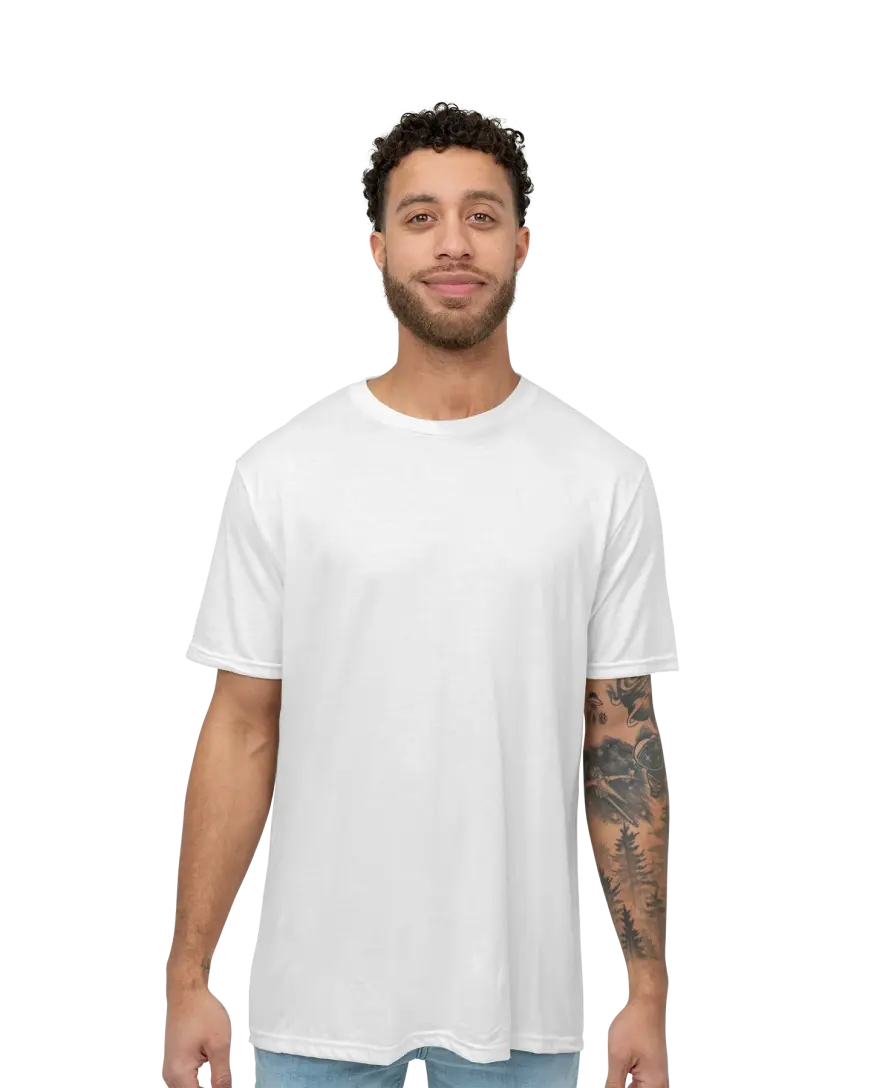
Now that you’re an expert on fabric contents and construction, you can purchase with confidence, knowing you and your group will be thrilled with your garment selection.
Below, you’ll find one more reference guide with popular retail garments you may already know, along with similar products at BlueCotton.
| Fiber Content | What It Feels Like | Popular Retail Comparison | BlueCotton Product Examples |
| 100% Cotton | Classic, breathable, structured | Hanes Beefy-T, Carhartt tees, Old Navy Everyday Tee | |
| Ring-Spun / Combed Ring-Spun Cotton (100% Cotton) | Softer, smoother, retail feel | J.Crew, Banana Republic, Uniqlo Soft Cotton | |
| Airlume Combed & Ring-Spun Cotton (100% Cotton) | Ultra-soft, premium, lightweight | Everlane, Madewell, Allbirds | |
| Cotton/Poly Blend (50/50 or 60/40) | Soft, durable, slight stretch | Nike lifestyle tees, Adidas casual tees | |
| Tri-blend (Cotton/Poly/Rayon) | Extremely soft, drapey, vintage feel | Alternative Apparel, concert tees | |
| 100% Polyester | Lightweight, smooth, moisture-wicking | Nike Dri-FIT, Under Armour HeatGear |
If you have more questions about garments, creating a design, or anything related to screen printing and embroidery, the team at BlueCotton is here to help!