Choosing the right printing method is one of the most important decisions you’ll make when ordering custom apparel. While screen printing is still the go-to method for many custom shirt printing projects, DTG and DTF have become popular digital alternatives that excel at full-color designs, smaller order quantities, and projects that require greater flexibility.
Both produce high-quality prints without the setup costs associated with traditional screen printing, making them excellent options for everything from a small order of custom shirts to branded apparel for businesses, schools, parties, and clothing brands. At first glance, they may seem very similar, but they work differently and each has strengths that make it a better fit for certain projects.
If you’re deciding between DTF and DTG printing, understanding the practical differences can help you choose the method that delivers the best results for your artwork, garment choice, and order size.
DTF vs. DTG At a Glance
| DTG | DTF | |
| Color limit | None | None |
| Best fabric | 100% cotton, cotton-rich blends, natural fibers | Most apparel fabrics |
| Garment color | Best on white or light colors | Works on any color |
| Feel | Soaks into the fabric for a softer hand | Sits as a layer on top of the fabric |
| Durability | Starts to show fade after 20+ washes | Stays vibrant after 50+ washes |
| Order size | Best for small runs with lots of colors | Best for small runs with lots of colors |
What Both Methods Do Well
Before we dive into the differences, let’s talk about what these two printing methods have in common, and what sets them apart from a more traditional technique like screen printing.
Both DTF and DTG are digital methods, which means the design prints directly from the file rather than being broken down into a separate stencil for each color. Screen printing requires its own screen for every ink color, which is why those designs are usually kept to a handful of colors to control setup time and cost. DTF and DTG skip that step entirely.
This means both methods can easily handle photographs, full-color graphics, detailed illustrations, and smooth gradients alongside simple logos and text. Unlike screen printing, where each color requires its own screen, the number of colors in your design doesn’t affect the printing process.
Whether your artwork uses two colors or two hundred, you can achieve the same high level of detail without additional setup. That’s one of the biggest reasons DTG and DTF have become popular choices for custom apparel, especially for designs that would be difficult or expensive to produce with traditional printing methods.
What Is DTG Printing?
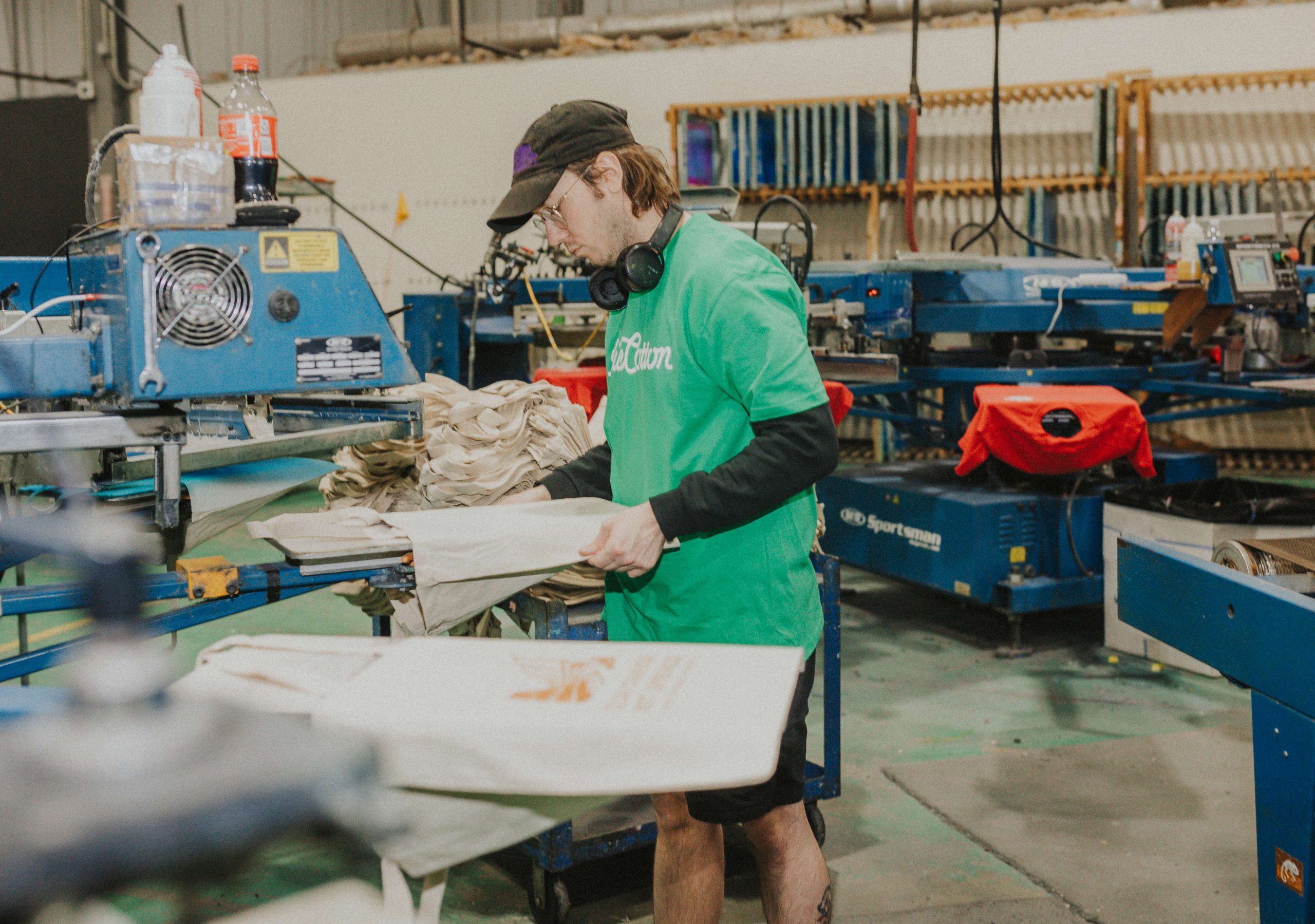
Direct-to-Garment (DTG) printing works much like an oversized inkjet printer. Instead of printing onto paper, the printer applies water-based textile inks directly onto the surface of the garment.
The shirt is loaded onto a flat platen inside the printer, and the design is printed directly into the fibers of the fabric. After printing, the ink is cured with heat, permanently bonding it to the garment.
Because the ink becomes part of the fabric rather than sitting on top of it, DTG is especially popular for premium cotton apparel. The finished print on white or light colored garments feels soft and lightweight, while maintaining excellent detail and color accuracy. The print on black tee shirts or dark colored tee shirts is still good but it is heavier and you can definitely feel the difference.
DTG is particularly well suited for:
- 100% cotton T-shirts
- Premium retail apparel
- Photographic artwork
- Small orders
- Detailed illustrations
What Is DTF Printing?
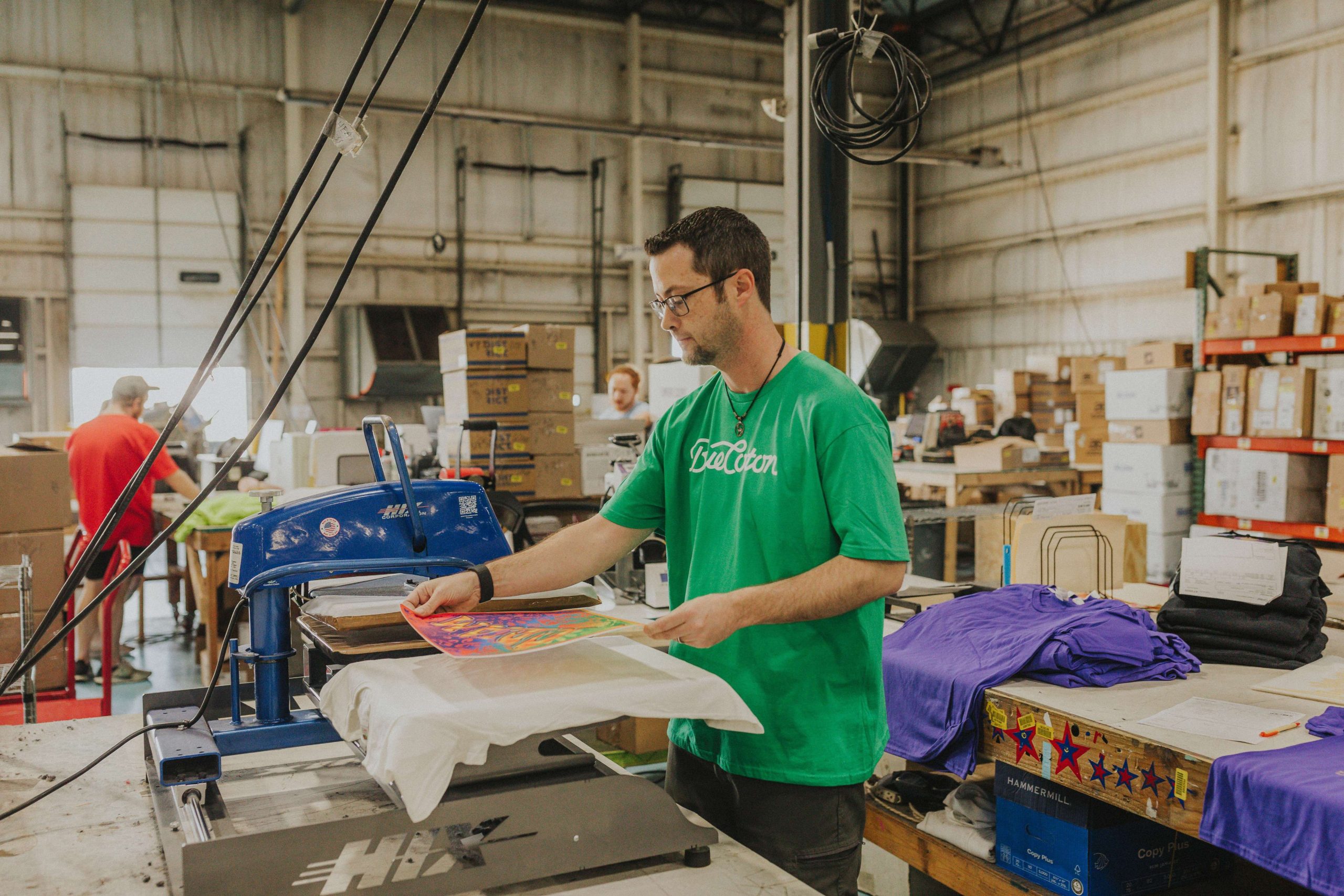
Direct-to-Film (DTF) printing follows a different process. Instead of printing directly onto the garment, the design is first printed onto a special transfer film.
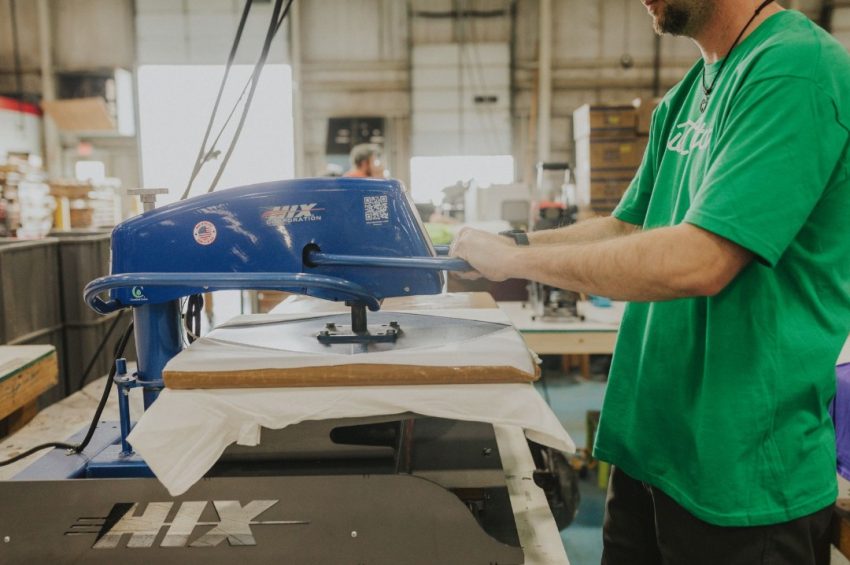
After printing, a powdered adhesive is applied to the wet ink and cured with heat. The completed transfer is then positioned on the garment and permanently applied using a heat press. Once the film is peeled away, the printed design remains attached to the fabric.
This extra transfer step gives DTF one major advantage: the print can be applied to a much wider variety of fabrics than DTG.
DTF is compatible with:
- Cotton
- Polyester
- Cotton/poly blends
- Performance apparel
- Fleece
- Nylon
- Many specialty fabrics
For organizations, sports teams, businesses, and brands ordering multiple garment types, that versatility can be extremely valuable.
How the Finished Print Feels
One of the biggest differences you’ll notice is the hand feel, or how the print feels when you touch it.
With DTG, the ink soaks into the fibers of the shirt. On high-quality cotton garments, especially lighter colors, the design often feels almost like part of the fabric itself. The print remains soft, flexible, and breathable.
DTF creates a very thin printed layer that sits on top of the garment. Modern DTF transfers are dramatically softer than older heat-transfer technologies like those plastic feeling names and numbers on your old little league jerseys, but you’ll usually be able to feel the design slightly when you run your hand across it.
The right choice depends on the look and feel you’re after.
- If softness is your highest priority, DTG usually has the edge.
- If versatility across different garments matters more, DTF is often the better option.
Which Method Produces Better Color?
Both DTG and DTF can produce a wide range of colors, smooth gradients, photographs, and intricate artwork.
That said, there are some visual differences.
DTG produces a more natural appearance because the ink becomes integrated into the fabric. Colors often have a slightly softer look than the vibrant appearance of DTF, which makes this method an excellent choice for an intentional vintage-inspired artwork.
DTF tends to produce brighter, more saturated colors because the ink sits on the surface of the garment instead of being absorbed into the fibers. Logos, bold illustrations, and high-contrast graphics often appear especially vivid.
- If your artwork relies on rich, eye-catching colors, DTF may provide a slight advantage.
- If you’re looking for a premium retail feel with a softer aesthetic, DTG is often preferred.
Bottom Line: DTF is more vibrant and more clear. DTG, while still looking great, is more muted.
Which Works Best on Different Fabrics?
Fabric compatibility is one of the biggest deciding factors.
DTG performs best on garments with a high cotton content and other natural fibers. Cotton fibers absorb the water-based inks exceptionally well, producing sharp details and long-lasting prints.
A smooth, ringspun cotton tee like the Gildan 64000 or the Bella + Canvas 3001 is the kind of shirt where DTG genuinely shines.
Although DTG technology has improved significantly on cotton blends, polyester and synthetic fabrics generally don’t produce the same results because they don’t absorb the ink in the same way.
DTF, on the other hand, is remarkably versatile.
Because the design is transferred using an adhesive rather than relying on the fabric to absorb ink, it works consistently across many different materials.
If your order includes multiple garment styles made from polyester, blends, fleece, or other synthetic material, DTF can simplify the production process while delivering consistent results.
What About Dark Shirts?
Dark garments require special consideration because colors need an opaque white layer beneath them to remain vibrant.
With DTG, dark shirts typically require a pretreatment solution before printing. This preparation allows the white ink to bond properly with the fabric and creates a clean foundation for the colors printed on top. Sometimes the pretreat leaves an outline that is visible on the garment and it does not always go away with washing.
DTF handles this differently. The white layer is printed directly onto the transfer film as part of the design before the transfer is applied to the garment.
For dark garments, DTF generally has a production advantage because it doesn’t require garment pretreatment. Both methods produce vibrant graphics, but DTF often simplifies the printing process by eliminating the pretreatment step.
Durability and Washability
When properly produced, both DTG and DTF prints offer excellent durability. There is however a difference in how soon the print starts fading.
DTG prints become embedded within the cotton fibers, allowing the design to age naturally with the garment. The print is less durable than the heat-activated adhesive used in DTF, so it will start to show some fading after about 20+ washes.
DTF transfers, on the other hand, are highly durable. Modern adhesive technology allows the print to remain flexible while resisting cracking, peeling, and fading well after 50 washes.
As with any decoration method, proper care like washing the shirts inside out with cold water and avoiding high-heat dryer cycles will keep your prints looking good longer.
How Order Size Affects Cost
One of the advantages of both DTG and DTF is that they eliminate many of the setup time and costs associated with screen printing.
For very small orders, both methods are cost-effective because there’s no need to create screens for each color.
This makes them ideal for family events, small business team shirts, startup clothing brands, and any orders that don’t require a huge run.
For both methods, once you start scaling into the dozens or hundreds, screen printing usually becomes the more cost-effective option for most designs, since the per-unit cost drops fast at volume in a way digital methods don’t. If you’re ordering in bulk and your design doesn’t need a huge color count, screen printing may become the most economical option.
When Should You Choose DTG?
If your goal is achieving an exceptionally soft print with a premium feel on cotton garments, DTG is hard to beat.
Lean toward DTG if:
- Your shirts are 100% cotton or a cotton-rich blend
- You’re working with white or light-colored garments
- You want the softest possible feel for a detailed or photo-style design
- You’re ordering a small number of shirts or a handful of different designs, where the lack of setup time matters more than the per-unit ink cost
When Should You Choose DTF?
The broad fabric compatibility makes DTF one of the most versatile decoration methods available today.
Lean toward DTF if:
- Your garment is polyester, a blend, nylon, or another non-cotton fabric
- You’re printing on a dark or saturated garment color and want the design to pop
- Your order includes a mix of fabric types across different products, like tees paired with hoodies or bags
- You want a design that can stretch and move with a fitted or athletic-cut shirt
Let Us Help You Choose
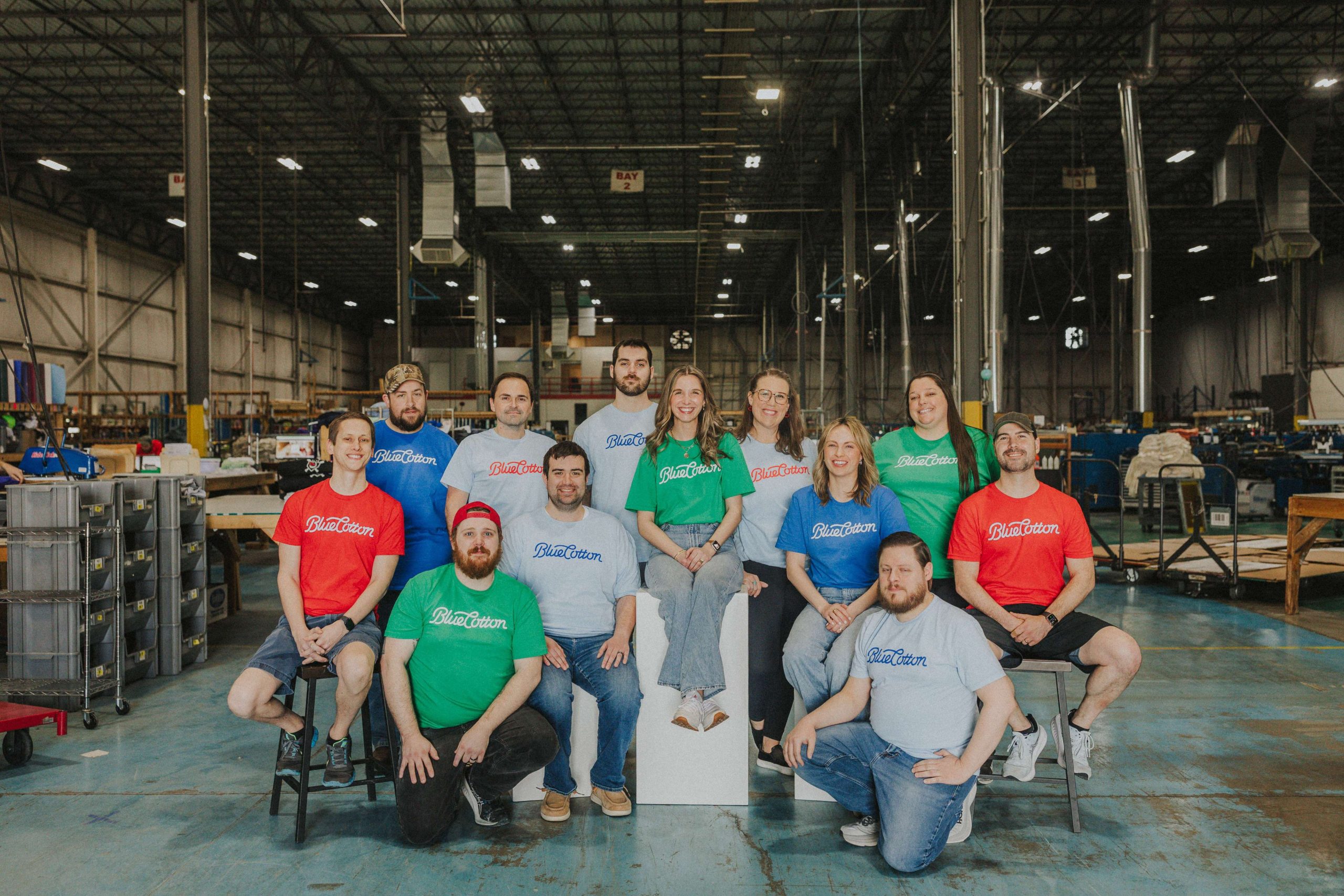
At BlueCotton, we offer both DTF and DTG printing, allowing you to select the decoration method that best matches your artwork, garments, timeline, and budget.
Every order placed with us goes through an artist review before anything gets produced. If your design and garment combination would print better with a different method, we’ll flag it and walk you through the alternative before your order goes into production.
By understanding the strengths of both DTG and DTF, you can choose the printing method that best fits your artwork, garments, and budget, giving you confidence that your finished apparel will look and perform the way you expect.