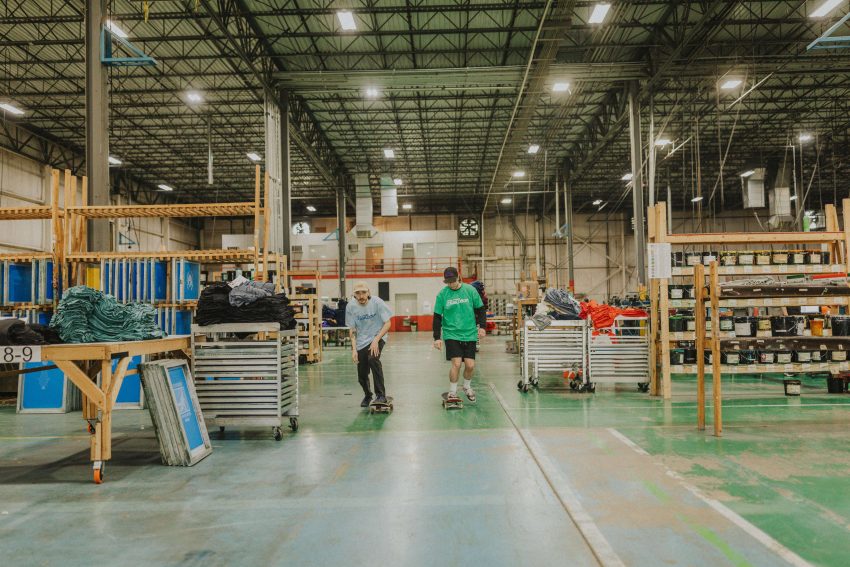
Getting your custom design printed on a standard cotton T-shirt isn’t always the best choice, especially when you’re ordering shirts for a team, company event, race, outdoor crew, or group that spends a lot of time moving around.
Athletic shirts are made specifically for performance: lighter-weight constructions, faster drying times, and moisture management that moves sweat off the body rather than absorbing it. Many also incorporate features like breathable mesh zones, mechanical stretch, or enhanced color-retention treatments.
The trick is figuring out which type of athletic shirt makes sense for your group. A lightweight polyester tee can be great for a 5K, while a cotton-poly blend may be more comfortable for an all-day event. An athletic polo can give a corporate team the same moisture management in a more polished package.
Here’s what to consider before placing your order.
Start With the Fabric
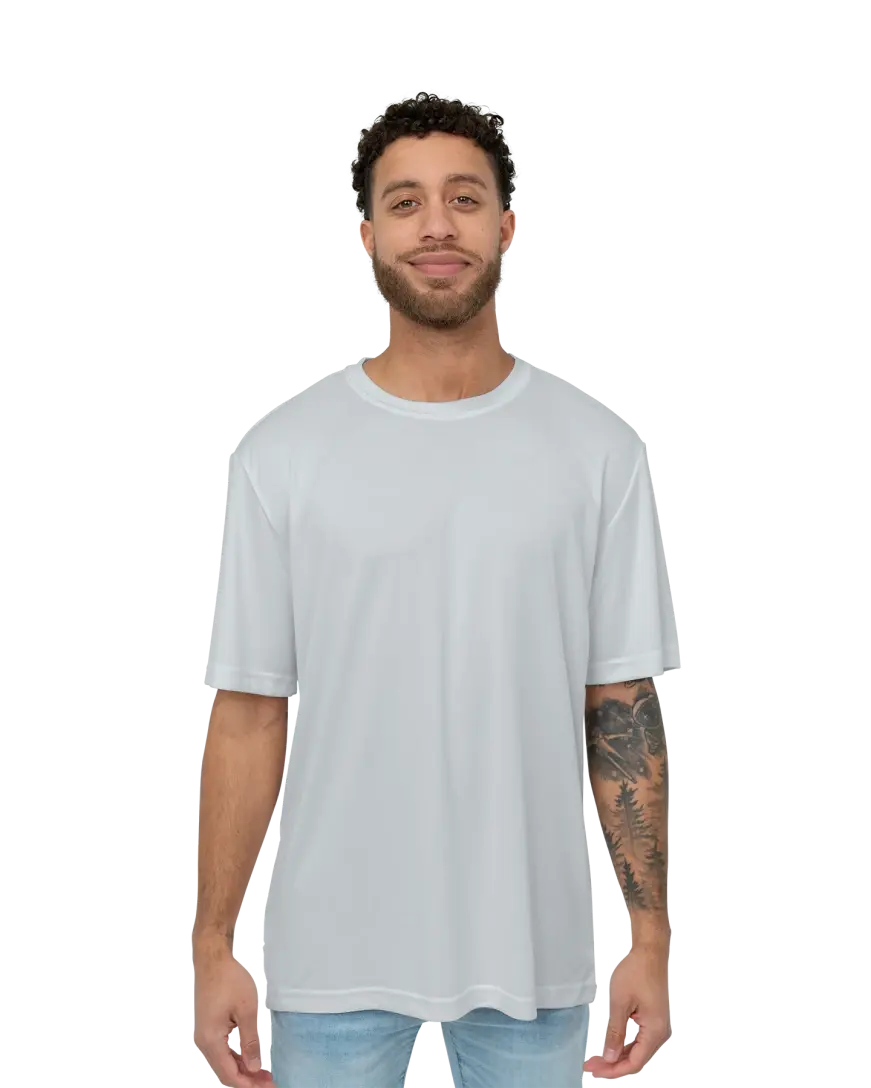
The biggest difference between athletic shirts comes down to what material they’re made from.
100% Polyester
Most athletic shirts are made from 100% polyester, which is lightweight, durable, quick-drying, and commonly used in moisture-wicking apparel. Instead of absorbing sweat like cotton, performance polyester helps move moisture across the surface of the fabric so it can dry more quickly.
This makes it a natural choice for anyone who expects to sweat in the shirt, including:
- Sports teams and training groups
- Runs, walks, and outdoor events
- Summer camps
- Fitness classes
- Outdoor employees
The ST350 Sport-Tek Competitor Tee is a good example. This is a lightweight 3.8-ounce, 100% polyester shirt with sweat-control fabric, a roomy cut, and double-needle sleeves and hem. It comes in both kids and adult sizes, making it easy to outfit an entire group from youth teams through full adult rosters. One of its biggest advantages is color variety: It’s available in 34 different colors, which makes it easy to match team branding, school colors, or event themes.
The Augusta 790 Moisture Wicking Tee is another 100% polyester option at 3.7 ounces. It comes in both kids and adult sizes, so it works well for programs that need to outfit everyone from youth participants to adult staff. It also offers a solid range of color choices with 17 available colors, giving you flexibility without overwhelming your selection process.
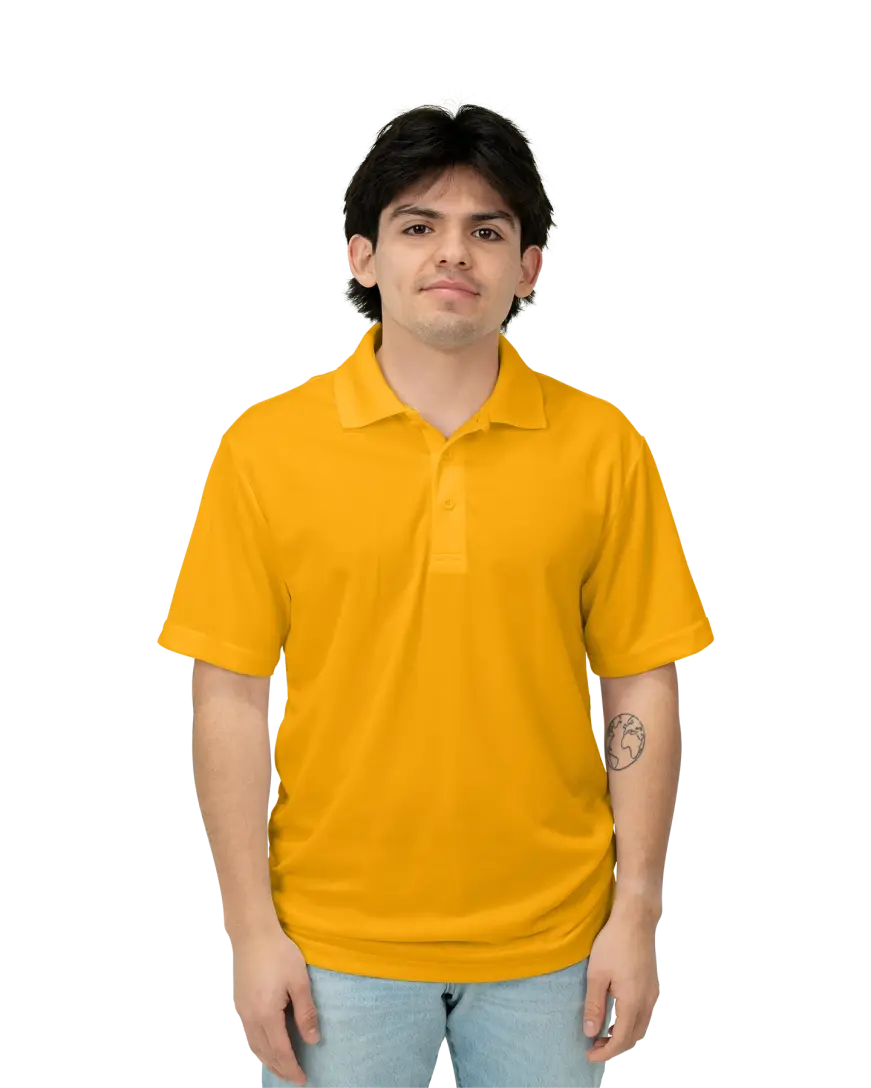
For hot-weather events where you still want a clean, professional appearance, the ST640 Sport-Tek PosiCharge RacerMesh Polo builds on the same performance-focused design and adds an ultra-fine flat-back mesh construction for enhanced airflow. It’s a strong option when a polo is preferred over a T-shirt, and it comes in 18 colors.
Cotton/Poly Blends
Cotton-poly blends sit somewhere between a traditional T-shirt and a technical athletic shirt. The cotton adds some of the familiar softness people expect from a T-shirt, while the polyester improves durability, shape retention, and moisture management. This can be a good middle ground for groups that want some performance benefits without a distinctly athletic feel.
The 8000 Gildan DryBlend 50/50 Tee is one of our top-selling performance-oriented blends. Its 50/50 cotton-poly fabric is moisture-wicking, and it works well for everything from sports practice to outdoor events. It also comes in both adult and kids sizes, and is available in 31 color options.
There’s also the 8800 Gildan 5.6 oz. DryBlend 50/50 Jersey Polo, which gives you the same basic blend in a more professional style. Its smooth jersey knit is well suited to screen printing, making it an interesting option for uniforms and active workplace teams. Like the tee, it is available in both adult and kids sizes and comes in 18 color options.
As a general rule, think about how active the wearer will be. For intense exercise or hot outdoor conditions, 100% polyester performance fabric is usually the safer choice. For an event where people may be active for part of the day and socializing or working the rest of it, a cotton-poly blend can be a comfortable compromise.
Decide How You Want to Customize the Shirt
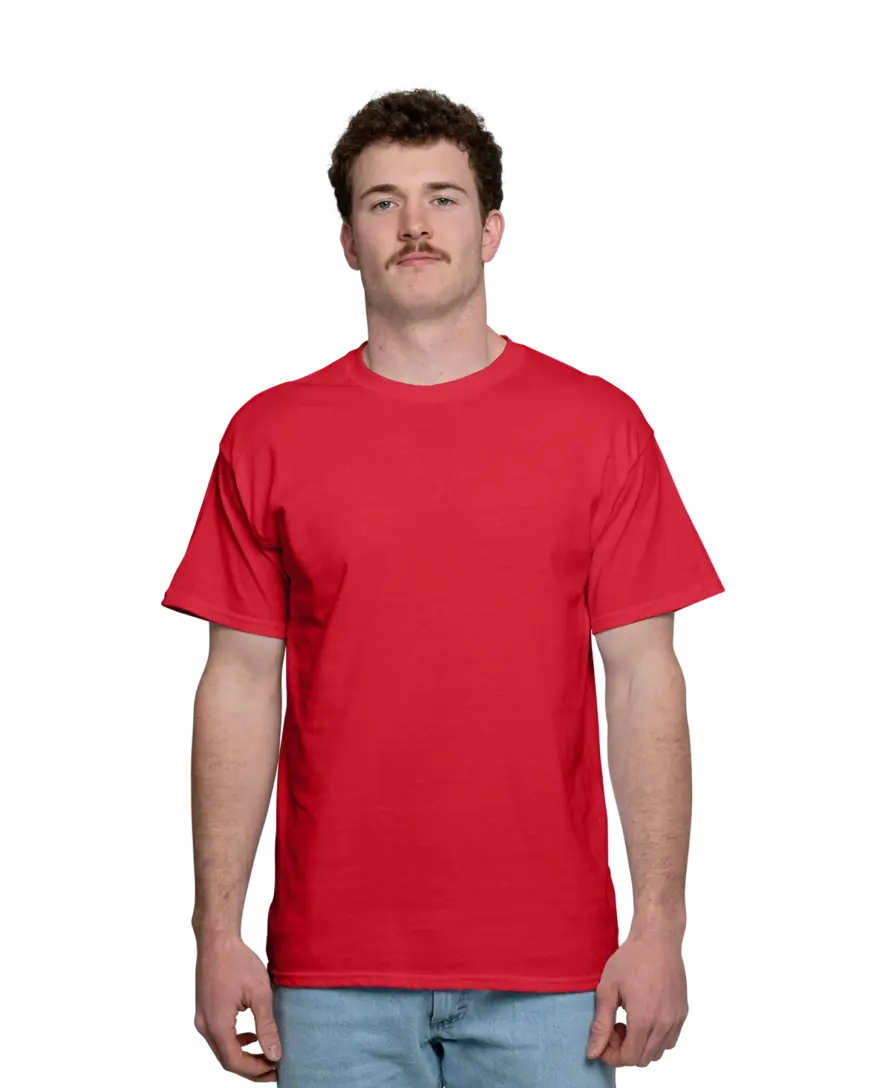
Athletic shirts are often lightweight, which affects how a design looks and feels. A large graphic reads as more noticeable on a thin performance tee than it would on a heavyweight cotton blank, and it can add a bit of structure (and slightly reduce breathability) across the covered area. For a shirt people will actually exercise in, a simpler design tends to keep the garment feeling lighter.
A few things to settle before finalizing artwork:
- Placement: A bold front or back print suits team shirts and event apparel. A smaller left-chest logo works better for company uniforms and athletic polos.
- Size: Scale the design to the garment, not just to the artboard. Lighter fabrics show the weight of a large print more.
- Shirt color: Make sure your logo has enough contrast against the base color, especially if the design depends on specific brand colors.
- Repeat wear: For event shirts, a clean team mark or subtle graphic gives the shirt a life after race day.
When it comes to the exact method you use, there are two primary ways to approach it: screen printing and embroidery.
For athletic shirts, screen printing is a good choice when the design itself is a major part of the shirt. It’s especially useful for team names, event graphics, large logos, and designs placed across the front or back. Screen printing gives you a flat, graphic finish that works well for these types of designs.
The raised, textured finish of embroidery is especially well suited to athletic polos and other performance garments where you want the decoration to look polished and professional. However, you’ll want to keep the design minimal, such as a simple company logo on the chest. If the design is a larger graphic intended for the front or back of the shirt, screen printing would generally be more practical.
When choosing between the two methods, consider the design as well as the garment. Simple logos, names, and clean shapes tend to translate well into embroidery, while very small lettering, fine lines, and highly detailed artwork can be harder to reproduce clearly with thread.
Quantity can also play a role when deciding between the two methods. Screen printing can become more economical as quantity increases, while embroidery remains a practical option for larger uniform orders when the design is well suited to stitching.
Pay Attention to the Fit
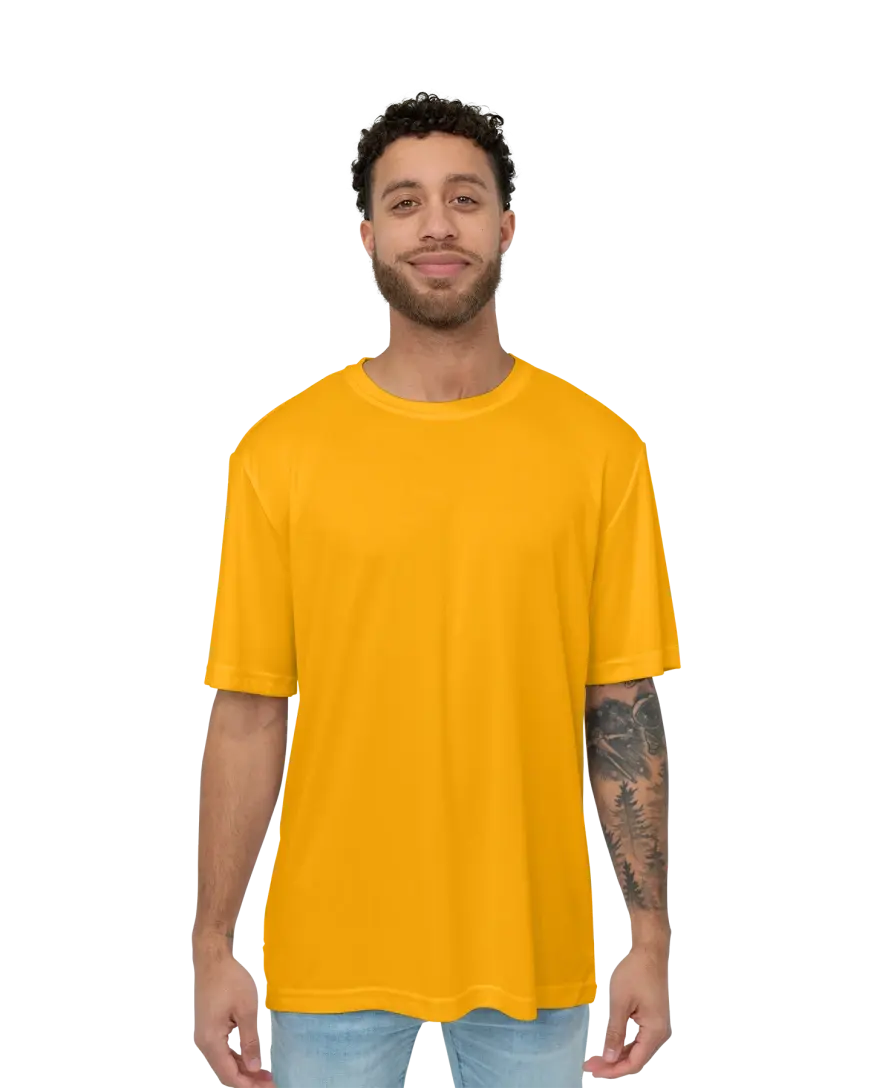
Performance shirts fit differently than a classic cotton tee, and it tends to vary more by brand than a basic cotton blank does.
Men’s and unisex performance tees, such as the ST350 Sport-Tek Competitor, run toward a roomy, athletic cut built for movement rather than a slim fit. Most customers describe it as true to size, maybe a touch generous, without feeling tight through the body.
Women’s-specific cuts, like the Ladies Competitor and the Ladies RacerMesh Polo, are built with a more contoured silhouette: a scoop or V-neck, a tapered waist, and a closer fit through the torso. If your group includes a range of body types, you could offer both the unisex and women’s cut rather than one style for everyone.
Before placing a large order:
- Check the specific size chart for the exact shirt.
- Compare measurements with a shirt that already fits.
- Pay attention to whether the garment is described as classic, relaxed, athletic, or fitted.
- Check whether the style offers youth, plus, or tall sizing.
- Consider ordering a sample if you’re unsure about the fit.
Check the size chart and availability for your specific shirt before putting together your final size breakdown.
Questions to Ask Before Ordering
Once you’ve narrowed down your shirt options, a few practical questions can help you navigate the process smoothly.
For the Fabric:
- Is this shirt moisture-wicking?
- Is it 100% polyester or a cotton/poly blend?
- Is the fabric lightweight enough for the activity?
- Does it have features such as mesh, stretch, or color-retention technology?
For Customization:
- Which decoration methods are available for this exact shirt?
- Would screen printing work well for the size and placement of our design?
- Would embroidery make more sense for a polo or corporate logo?
- Are there any design or placement considerations for this particular garment?
For Sizing:
- Are the men’s, women’s, and youth styles cut differently?
- Does the shirt run roomy, fitted, or true to the measurements?
- Are plus or tall sizes available?
- Should we order a sample before placing the full order?
For the Order:
- What mix of sizes is needed for the group?
- What date do we need the shirts by?
- When is the final artwork and size information due?
- What happens if someone needs to change their size before production?
Which Athletic Shirt Should You Choose?
There’s no single best athletic shirt for every group. The right choice depends on what the shirt will be used for.
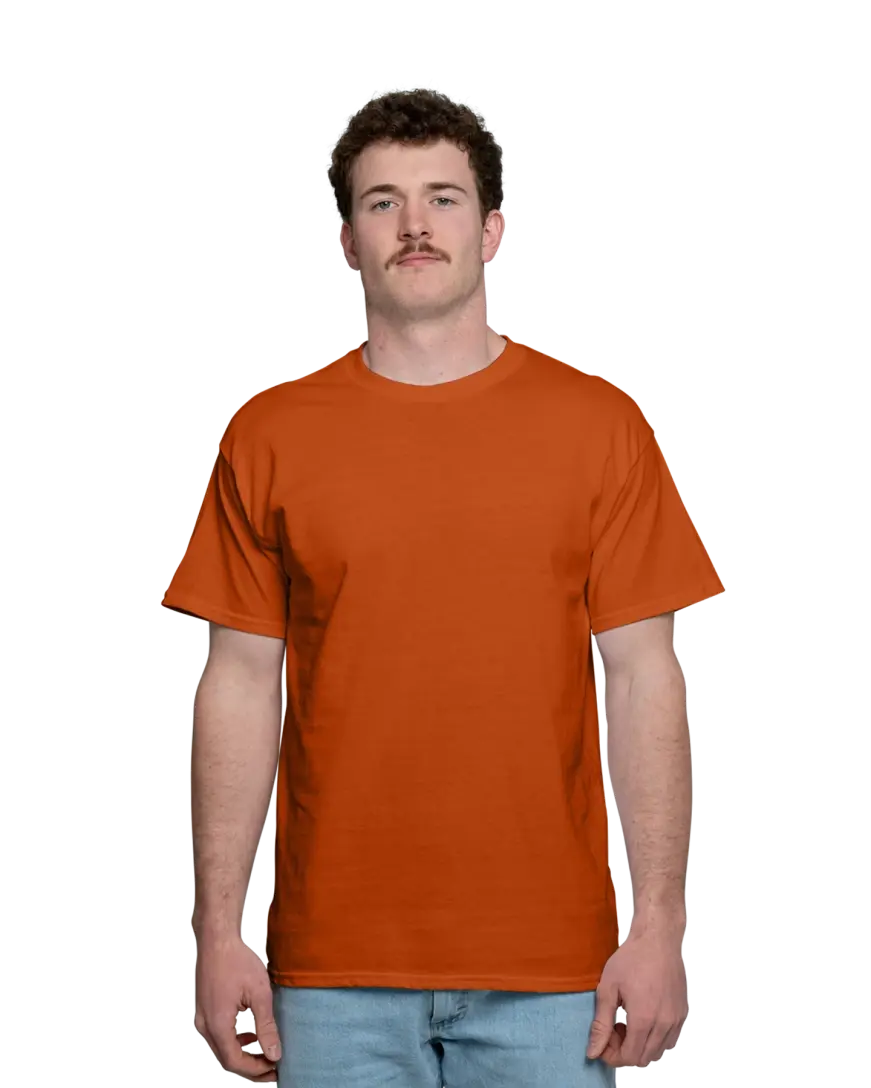
For sports teams, races, and active events, start with a lightweight 100% polyester shirt like the ST350 Sport-Tek Competitor Tee or Augusta 790 Moisture Wicking Tee. Both are designed for active use and offer moisture-wicking fabric.
For a softer everyday performance option, consider the 8000 Gildan DryBlend 50/50 Tee, which combines cotton’s comfort with moisture-wicking polyester.
For professional uniforms, a performance polo like the K540 Port Authority Silk Touch Performance Polo gives you moisture management in a more polished style.
For hot outdoor conditions, the ST640 Sport-Tek PosiCharge RacerMesh Polo is designed around airflow and moisture management, while the women’s LST640 provides a corresponding women’s cut.
For a premium branded polo, the Nike Dri-FIT Micro Pique 2.0 Polo combines a recognizable athletic brand with a 100% polyester fabric and a more refined polo silhouette.