
Pricing is one of the biggest questions our customers have, but it’s also one of the hardest to answer.
That’s because custom T-shirts don’t have a single fixed price! Your order is unique and one-of-a-kind, which makes generic pricing nearly impossible. That being said, there are some general guidelines that can help you understand the pricing that goes into your custom order.
Why Is Custom Pricing So Complicated?
When I first started BlueCotton in 1991, I would actually call around to other local print shops to find out what they were charging for custom orders just so I’d have an idea of what I should charge!
Sometimes, they’d tell me $5 or $6 (1991 prices were something else) — a low price that they’d use to reel people in. But then they’d start adding on all of the additional charges (setup fees, art fees, screen fees, rush fees, etc), and by the time they were finished, the shirts were considerably more than the original $5 price, leaving customers miffed and me utterly confused.
I decided I didn’t want to play that kind of song and dance for my customers. I wanted to provide a transparent, all-in-one price right out of the gate; it keeps things simple for both us and our customers, and it’s part of why we’re still around to this day.
So let’s break it down for you in a clear-cut way that skips the bait-and-switch rigamarole.
At Blue Cotton, pricing comes down to three factors:
- Shirt brand/type/color
- Number of colors and print locations
- Quantity
These factors are self-explanatory on the surface, but they’re worth going over to get the full picture.
So let’s jump in.
Shirt Brand, Type, and Color
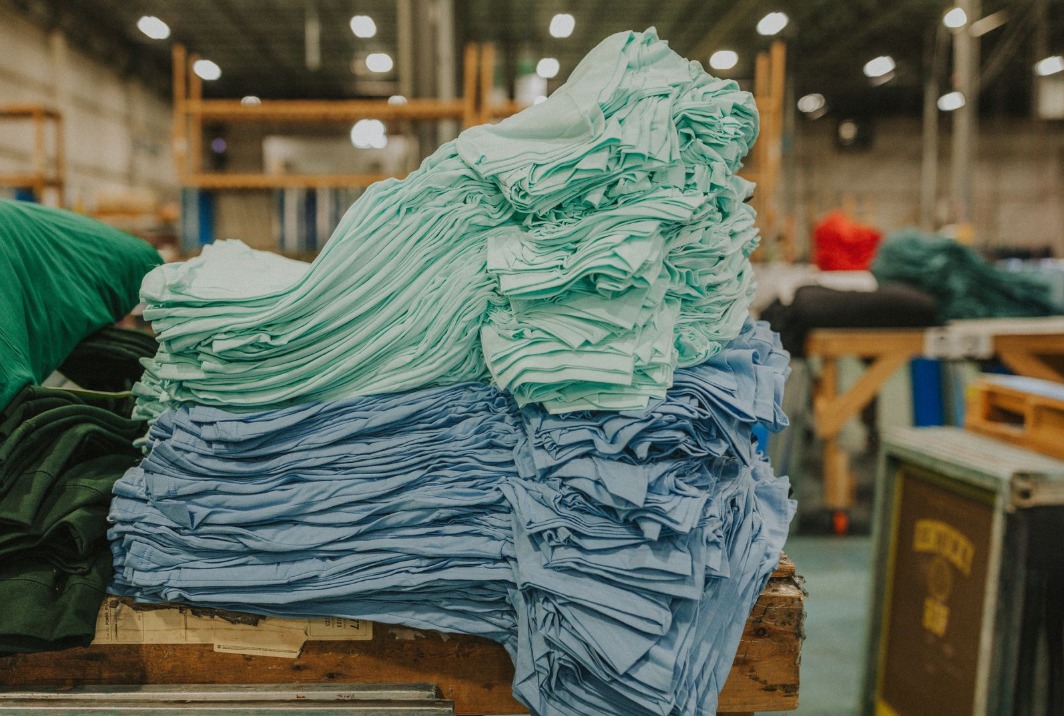
The brand, type, and color of shirt you order make a big difference.
We offer shirts from inexpensive brands like Gildan, Hanes, and Jerzees, all the way up to major big-name brands like Nike, Adidas, and Under Armour. As you can imagine, there’s a pretty big pricing gap here.
Let’s use Gildan as an example. The most basic Gildan shirt wholesales between $3 and $5 — but even within the Gildan brand, there are a variety of options. The Gildan 5000 is less expensive than the Gildan 2000, which is less expensive than the Gildan 64000. But all three are three very popular styles and make up an enormous amount of market share.
Compare this to brands like Comfort Colors, Next Level, and Bella/Canvas. These shirts are much more stylish and have a better fit, using much softer and more complex materials than a basic T-shirt. These shirts usually wholesale between $5 and $9, depending on the specific style.
Then there’s the type of shirt you order. For example, tri-blend shirts made famous by American Apparel, Next Level, and Bella/Canvas cost considerably more than standard 100% cotton shirts. However, these shirts are also generally more well-liked, more frequently worn, and will get your message to more people. You get what you pay for, after all.
Finally, the color of the shirt you order can make a difference as well. Most notably, white shirts are less expensive than black shirts for two reasons: First, the added black dye means that the shirts themselves will cost about $1 more than white ones. Second, the printing process is more expensive because in order to print on a dark shirt, we have to first lay down a base layer of white ink.
For example, say you want a yellow design on a black shirt. If we were to print yellow ink directly onto a black shirt, the fabric would just absorb that yellow, and the design wouldn’t be very vibrant. You could still see the image, but it would look very dull and lifeless. The solution is to print a layer of white ink first. Once dried, it serves as a base for the yellow ink, making the resulting color much more vibrant and easy to see.
However, this process adds ink and time, making the overall cost greater than the same design on a white or light-colored shirt.
Number of Colors and Print Locations
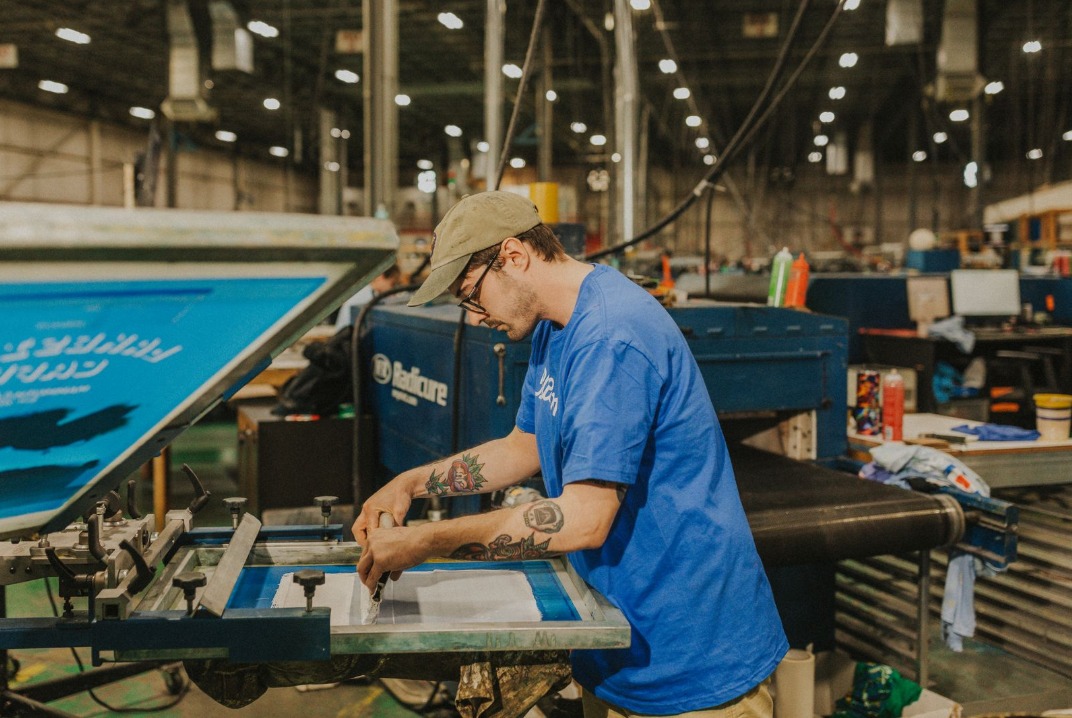
The second factor to consider is the number of colors you want in your design, as well as how many locations you want your design printed.
As you might guess, prints requiring just one color are less expensive than those with multiple colors — at least when it comes to screen printing, where ink is pushed through a mesh screen onto the garment.
That’s because each color requires a separate screen: If a design has three colors, you need three screens in the press (which takes the operator three times longer to set up than a one-color design). It even takes a little longer for each subsequent screen because they need to be aligned to the previous screens in order to make the design fit together perfectly.
Then you need to consider how many places on the shirt you want your design printed. After all, shirts with just one print on the front are cheaper than shirts with an additional back print and sleeve print. Even if the second location is very small, the cost goes up by sheer virtue of having to print a second location.
Here’s why: When we prepare an order for printing, we stack all of the shirts with the fronts facing up. Then, the operator pulls each shirt off the stack and loads it onto a printing press, where the ink colors are applied. After the shirt goes around the press and comes back to the operator with the design applied, the operator takes it off the press and lays it on a conveyor belt that runs through a very hot dryer.
If there’s just one printing location, that’s essentially the end of production. But if the order calls for a second print on the back, we then have to stack those shirts a second time with the backs facing up, and the whole process begins again. Then imagine repeating that for both sleeves — it’s not very common, but we see it every day.
Understandably so, this only raises labor costs, which are reflected in the final price of the shirt.
Quantity
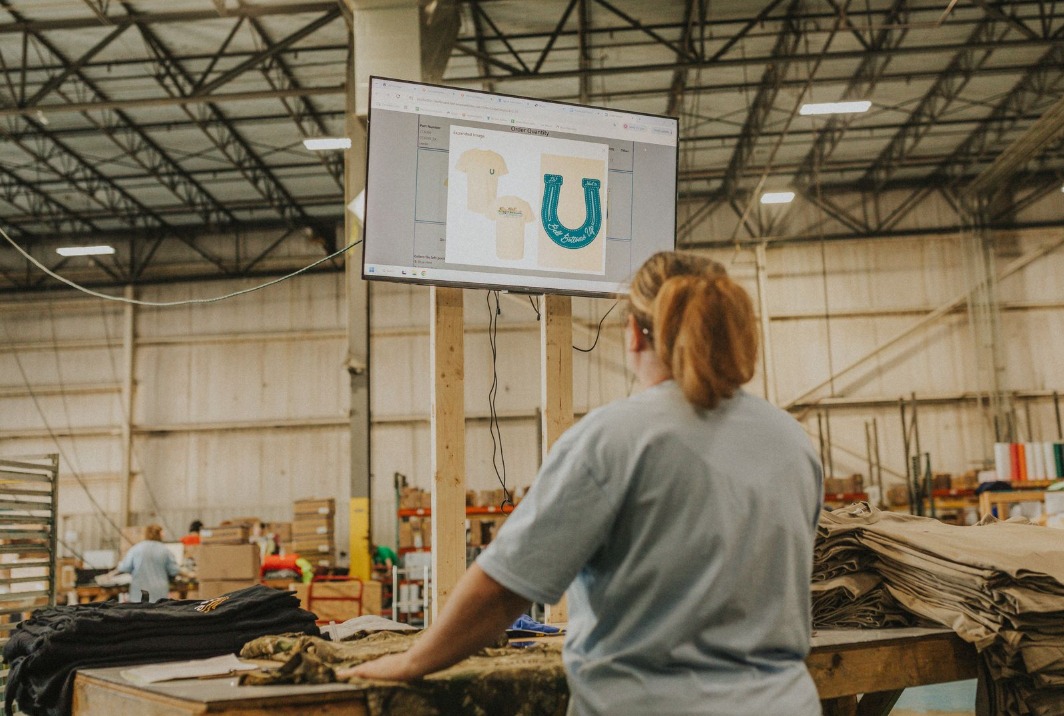
The third and final factor to consider is the quantity of shirts in your order. This is a very important factor because it impacts your final price in ways you might not expect.
That’s because a screen print order has a fixed amount of setup costs — generally about $30 per color. So if you have an image with three colors on the front design and five colors on the back design, your order will have $240 (8 colors x $30 each) of fixed setup costs.
However, quantity can absorb most of those costs.
If you just order 10 shirts, you’re paying $24 per shirt just in setup costs — not counting the cost of the shirt itself and the cost of the printing. But if you have 240 shirts in your order, those setup costs are just $1 per shirt. The quantity matters because you can spread those fixed costs over more pieces. You’re still paying the same amount in setup, but you can start to see why ordering more at a time (versus multiple orders) makes more sense financially.
Get a Quick Price Check for Your Upcoming Order
Given the multitude of factors that go into custom T-shirt costs, pricing can still seem a bit confusing. That’s why we have a handy quick price tool on our website where you can quickly check the cost of any garment we offer for just about any combination of colors.
If you’re particularly budget-conscious, you could just choose a cheaper shirt, but we’d recommend reducing the number of colors in your design, printing in just one location, or choosing a white shirt. That’s because people tend to wear nicer shirts more. And as we say at Blue Cotton, “every T-shirt tells a story” — and that story won’t get very far if the shirt is just worn once or twice.
But if you’re flexible and can work within certain restraints, then you can get a high-quality shirt at a reasonable price that your people will want to wear proudly for years.