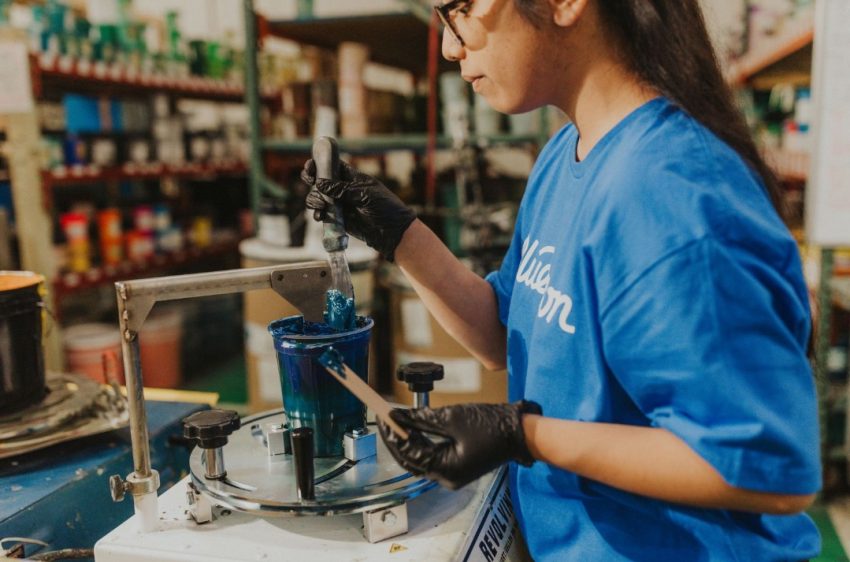
What is the difference between water-based printing and traditional plastisol ink printing when it comes to custom apparel?
The direct answer to that question comes purely down to how it feels on the fabric. All things being equal, there’s no question that water-based printing feels better.
However, feel is not the only thing to consider, and there are several other factors at play that often make plastisol a better choice.
At a Glance
| Plastisol Ink | Water-Based Ink | |
| Ink Vibrancy | Vivid | Matte |
| Hand Feel | Good | Excellent |
| Durability (50+ washes) | Excellent | Good |
| Compatibility with 100% Cotton | Excellent | Excellent only for white and light-colored fabric |
| Compatibility with Cotton/Poly blends | Excellent | Fair |
| Compatibility with Polyester | Excellent | Poor |
| Compatibility with Performance Fabrics | Excellent | Not recommended |
Hand Feel
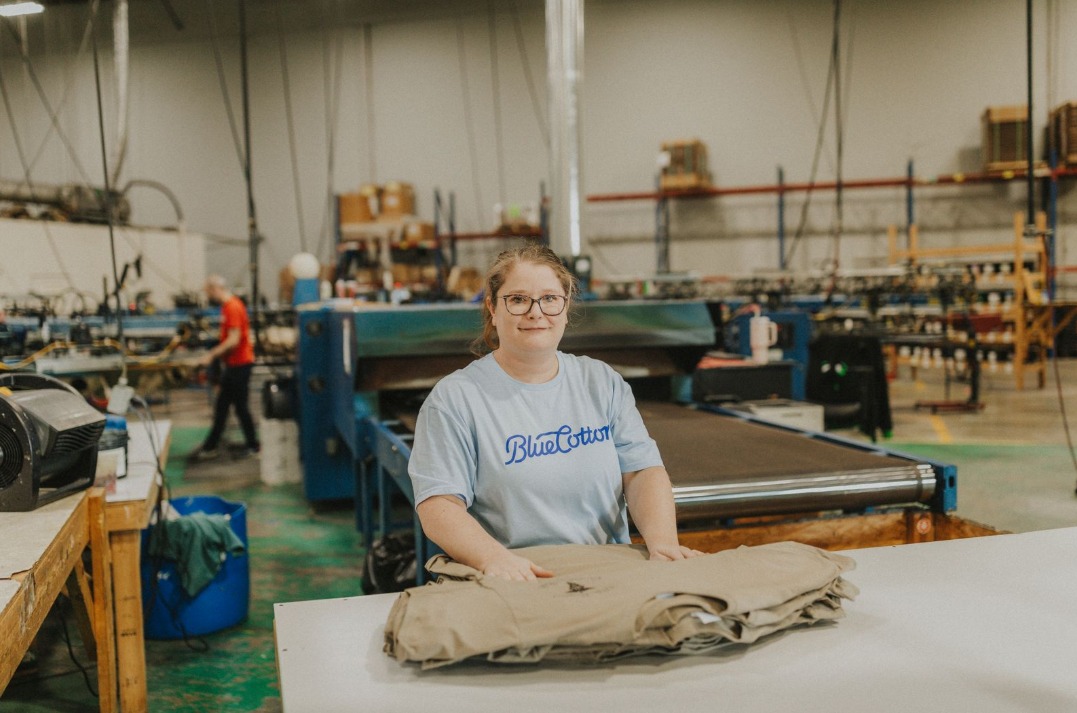
As noted, the biggest difference between these two types of inks is far and away how they feel on the garment.
When printed onto a garment, water-based ink penetrates the surface and really soaks into the fabric. After running the garment through a dryer, the heat evaporates the water, leaving only ink behind.
The result feels amazing. There’s no residue, no plastered-on film, and no stickiness. If you close your eyes and run your hands over the image, you can’t tell where the ink begins or ends. We call that phenomenon “hand”.
However, this is only true for white or light-colored fabrics. When printing on a darker fabric, you have to first print a white base before the colored ink can be applied — and while the colored ink is still indistinguishable from the fabric, you can definitely feel the white base.
Plastisol ink, on the other hand, is largely made up of resin and plasticizers, so when it’s printed, it actually sits on top of the fabric. It never soaks into the material and is never fully absorbed by it.
Like water-based ink, plastisol ink is also cured by heat. The difference is that instead of evaporating the ink, the heat simply fuses it to the fabric. The result is a distinctly noticeable feel; if you were to close your eyes and run your hands across the image, you can clearly feel where the print starts and stops. You can mitigate this with certain designs or screens with a higher mesh count (think a “higher-resolution” mesh), but the feel is still unmistakable.
Versatility & Efficiency
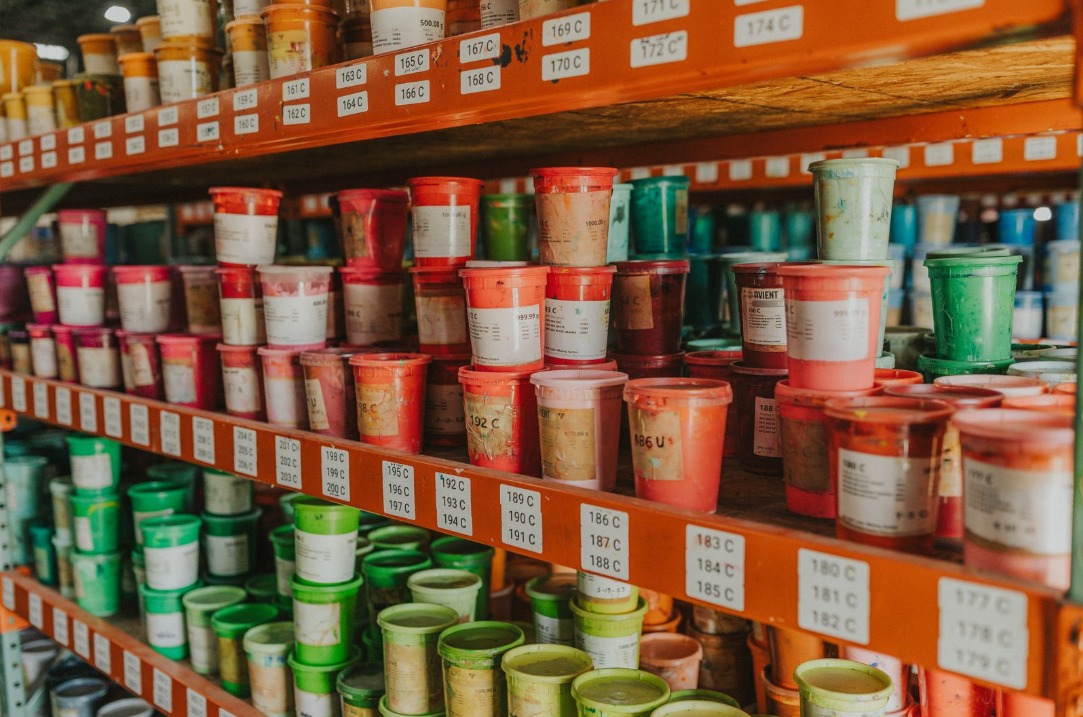
Plastisol ink is unmatched in its versatility. It can be printed on any material, color, or type of fabric — even on paper and leather. Chances are, any custom tees you own were printed with plastisol inks. This allows for a wide variety of uses, although dark fabrics require a white base to be printed first so that the colors will be vibrant. Plastisol ink is also cheaper and much easier to work with; it could sit for weeks waiting to be used because it doesn’t until it has extreme amounts of heat applied to it.
Water-based printing, on the other hand, is much more limited. It’s best for darker inks on white or light-colored, 100% cotton fabrics, though it can be used in other applications (just not as well). Furthermore, it’s unfeasible for anything more than short runs — water-based ink can literally dry into the screen mesh during the production process, which makes it difficult to produce consistent prints by the hundreds and thousands.
Use Cases
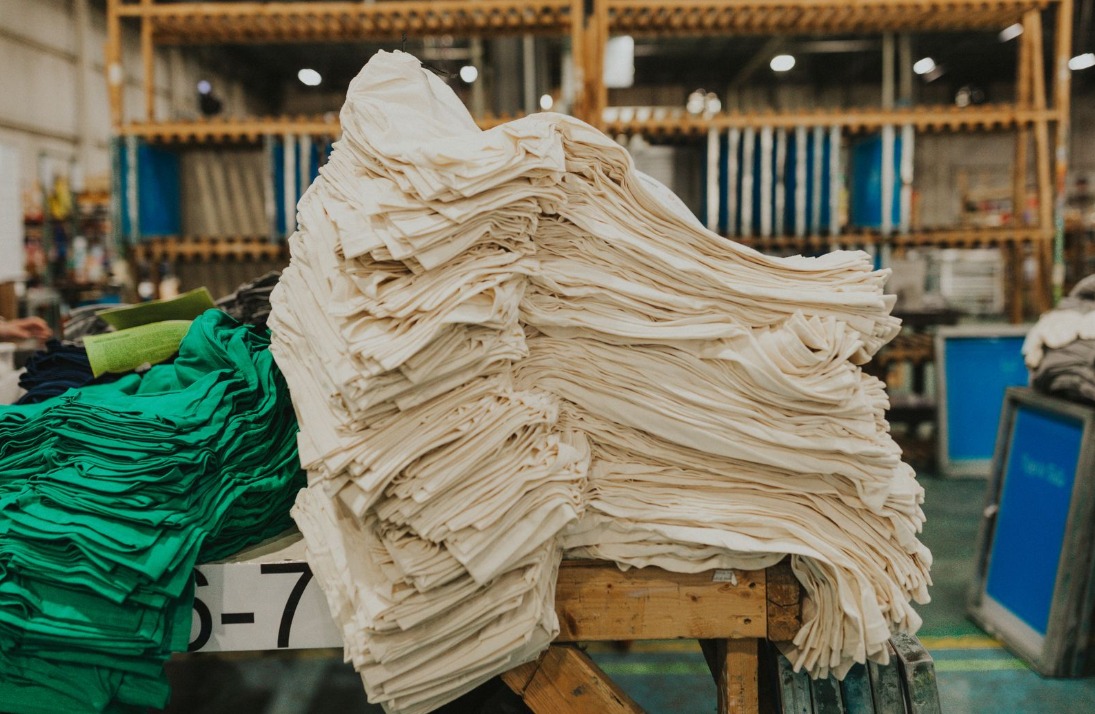
Water-based ink is superb for dark inks on white and light-colored, 100% cotton fabrics. However, these specific orders are in the vast minority; over 70% of the custom T-shirt market is in non-white shirts, and recent fashion trends have moved away from 100% cotton to blends of cotton, polyester, lycra, etc.
As a result, most printers have never even printed with water-based inks, and plastisol inks are far more common. They can be used across a wide variety of garments and colors, and the end result is very consistent.
Environmental Considerations
It’s easy to hear “water-based” ink and assume that it’s more environmentally friendly than an ink that’s based on plastic.
However, this is an oversimplification. When you consider the energy required to produce the ink and cure it onto the fabric (plus the hidden costs of waste and spoilage), and then when you take into consideration the usable lifespan of either form, it’s hard to make the case that one is greener than the other.
What is clear is that modern plastisol inks are phthalate-free formulations and meet all major compliance requirements.
Our Approach at BlueCotton
At BlueCotton, we can print with either water-based ink or plastisol ink. But unless a customer specifically requests water-based printing (and the details of the order allow for it), we stick to traditional plastisol inks.
Water-based ink is a solid, specialty capability. Plastisol ink, on the other hand, is more flexible, cheaper, and much more widely available, making it the clear winner for most use cases.