Polos tend to feel like a safe middle ground. They’re more polished than a tee, less formal than a button-down, and familiar enough that customizing them feels straightforward. Pick a style, add a logo or name, move on.
Where things get tricky is once a logo is part of the equation. That’s when you start to realize that polos are less forgiving than they appear.
Fabric choice and fit start to carry more weight. Texture becomes more noticeable. Stretch starts to work against you instead of with you. The shirt feels fine, but it looks slightly off in ways that are hard to pinpoint.
Here’s how to know which ones tend to stay solid once a logo is in the mix.
At a Glance
| Brand | Best For | Logo Performance | Fabric Vibe |
| Cutter & Buck | Polished, professional teams | Excellent, especially with embroidery | Soft, structured, and refined |
| Nike | Active teams and on-the-go roles | Very good, with placement limits | Lightweight and athletic |
| Port Authority | Large teams when consistency and budget matters | Reliable and forgiving | Traditional and uniform-ready |
| Adidas | Workwear with a sportier feel | Clean but more athletic | Lightweight and modern |
| TravisMathew | Elevated lifestyle uniforms | Good; best with simpler designs | Soft and relaxed |
| Sport-Tek | Active teams and events | Great for the price | Lightweight and practical |
| Under Armour | Workdays with plenty of movement | Solid, depends on fabric feel | Built for comfort and movement |
What Actually Matters for Customization
Most polo decisions start in the wrong place. People fixate on brand names, color counts, or whether the shirt feels nice on the hanger.
Those things matter, but they’re rarely what determines whether a custom polo ends up feeling polished or slightly off.
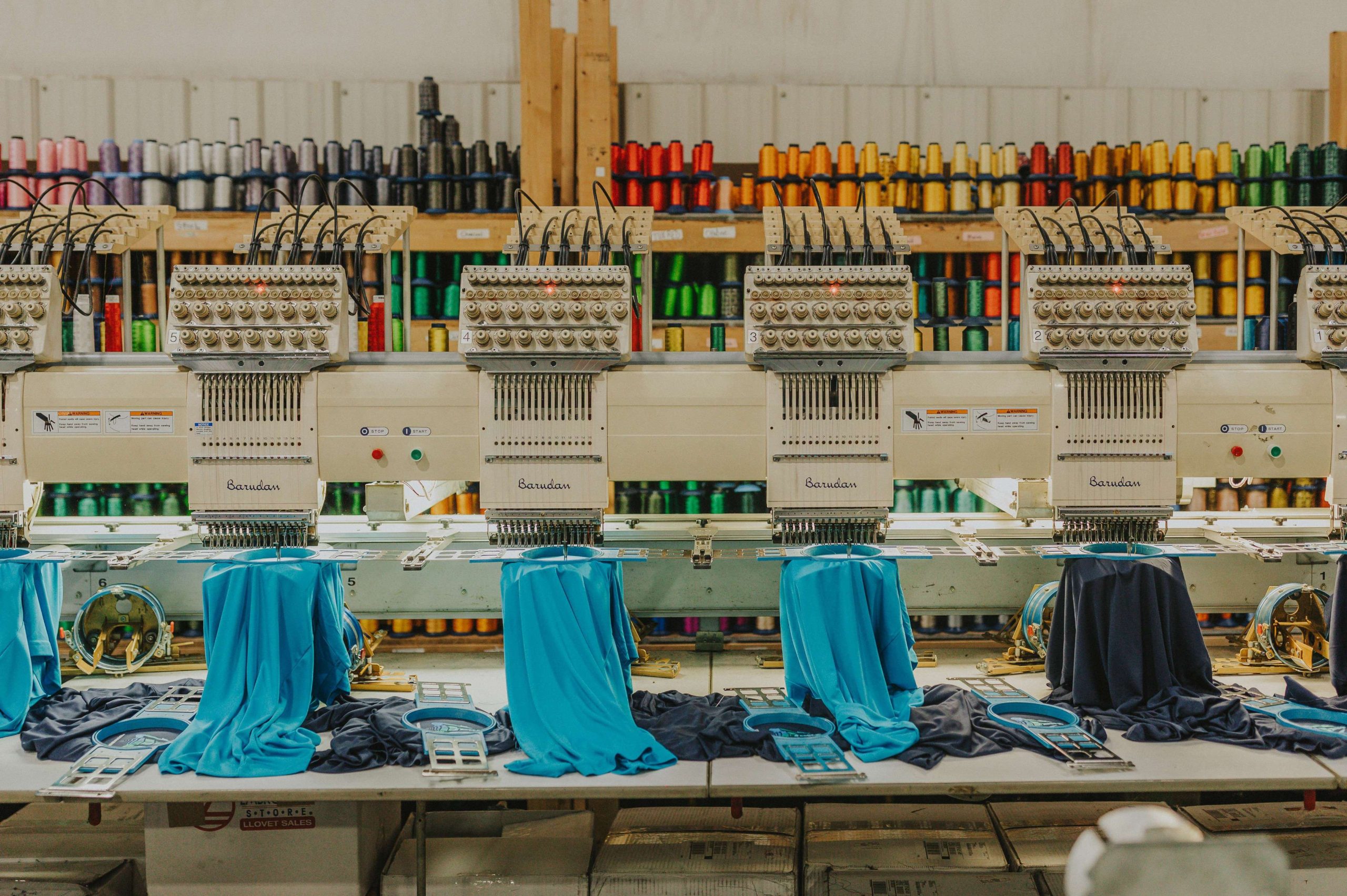
Printing & Embroidery Compatibility
Stretch-heavy polos fight dense stitching. Ultra-lightweight fabrics show every pull. Super smooth knits make embroidery feel more noticeable against the body. And textured fabrics, when done right, quietly hide a lot of sins.
Good embroidery on a polo should look like it belongs there: flat, integrated, no rippling, and no stiffness that makes the shirt feel armored. When embroidery feels like it’s sitting on top of the shirt instead of in it, that’s usually a fabric decision, not a stitching one.
If the goal is professional and long-lasting custom apparel, embroidery usually wins. It doesn’t fade the same way printing can, and it’s less likely to start drawing attention to itself as the shirt ages.
But printing definitely has its place. On lightweight performance polos or larger, simpler designs, it can feel more natural and less bulky against the fabric. But it also has a shorter runway; it’s crisp at first, then more dependent on fabric choice, heat, and how the shirt gets worn.
Problems tend to show up when decoration and fabric aren’t considered together. Dense embroidery on ultra-stretch polos can start to feel stiff, and large designs meant to feel polished can drift into promotional territory.
Fabric Texture
Piqué, jacquard, and heathered knits tend to be more forgiving. They break up stitch lines, hide tension, and forgive minor variations across sizes.
Ultra-smooth performance fabrics can look sharp out of the box, but they’re less forgiving once thread gets involved. Mesh polos breathe well but don’t always love dense, stitch-heavy logos. And stretch polos feel great… until embroidery pulls against them.
The best-performing polos usually sit somewhere in the middle. They should have enough structure to support stitching and enough softness to stay comfortable.
Fit Problems
Some polos look sharp on one person, then feel inconsistent when you see them side by side.
Semi-fitted styles can feel modern but inconsistent. Athletic cuts can alienate half the room. Simply put, limited size ranges create quiet frustration that shows up later in wear patterns and posture.
Classic fits aren’t exciting; they’re stable. And when you’re dressing a team, stability usually wins.
The Brands We Reach For (and Why)
When looking at brands, we pay attention to the consistency, fabric behavior, and how reliably a polo supports embroidery across sizes and styles. Some brands excel at polish, while others are better for movement, heat, or large teams that need predictability.
These are the polos we tend to reach for when appearance actually matters and there isn’t much room for do-overs:
Cutter & Buck
Best for professional teams that need polish without stiffness
Cutter & Buck polo shirts behave well once logos are added. The fabrics have enough structure to support embroidery, but they’re still comfortable enough to wear all day.
That same structure also helps simpler printed designs look clean rather than flimsy. It’s part of why these polos feel reliable when the goal is a finished, professional look without feeling overdone.
They’re also consistent across men’s and women’s styles, which matters once you’re ordering for a full team and not just one person.
Pros
- Stable fabrics that embroider cleanly
- Textures that help hide stitch tension
- Broad size ranges
- Looks professional without feeling formal
Cons
- Less athletic-looking than performance brands
- Higher price point
Nike
Best for on-the-go workdays
Nike polos are lightweight, breathable, and familiar, which makes them an easy yes. Embroidery usually looks clean, but placement matters. The fabrics are thinner and more athletic, so dense stitching can start to feel noticeable against the body.
On lighter styles, printing can sometimes feel more natural, especially for larger or simpler designs. It keeps the shirt flexible and comfortable without adding bulk. These tend to work best when the design stays simple and the setting leans active rather than traditional office wear.
Pros
- Lightweight and comfortable
- Strong moisture management
- Familiar, recognizable look
Cons
- Less forgiving with dense embroidery
- More athletic than professional in feel
Port Authority
Best for larger teams where consistency matters
Port Authority polo shirts are predictable in the best way. They embroider reliably, hold color well, and behave across a wide size range. Nothing about them is flashy, but that’s often the point.
Printing also holds up predictably here, which is why these polos work well for big orders. When you want fewer variables and fewer surprises, this brand tends to deliver.
If you’re managing a large team and just want everything to look the same from shirt to shirt, Port Authority is usually a safe call.
Pros
- Forgiving fabrics
- Extensive size availability
- Consistent results across styles
Cons
- Less modern feel
- Not as soft as premium brands
Adidas
Best for a polished look with a sportier edge
Adidas polo shirts sit closer to athletic wear but still clean up nicely. Embroidery works well when logos stay compact, and the fabrics are light and modern — which is great for movement but slightly less forgiving than structured knits.
On lighter styles, printing can be a cleaner option, especially when you want to avoid adding weight or stiffness to the shirt. Either way, these polos tend to look best when the design stays restrained.
Pros
- Lightweight performance fabrics
- Clean logo results with the right designs
- Modern look
Cons
- More athletic than corporate
- Less structure for heavier stitching
TravisMathew
Best for a more relaxed, put-together look
TravisMathew polos feel relaxed and intentional, working best with simpler logos that complement the fabric instead of competing with it. Light embroidery blends in well here, and small printed designs can also feel natural here without overpowering the shirt.
Note that these aren’t traditional uniform polos. They’re better suited for teams that want something softer and less corporate, where comfort and style matter just as much as consistency.
Pros
- Soft, comfortable fabrics
- Elevated casual feel
- Good drape
Cons
- Not ideal for complex logos
- Less uniform-like consistency
Sport-Tek
Best for events and large orders where value matters
Sport-Tek polo shirts are built to move. They’re breathable, hold color well, and perform better with logos than people often expect at this price point. Whether stitched or printed, the results tend to be solid and predictable.
They’re not luxury pieces, but they’re reliable when comfort and durability matter more than polish, especially for events or large groups.
Pros
- Strong embroidery performance for the price
- Breathable fabrics
- Wide color selection
Cons
- More utilitarian look
- Less refined feel
Under Armour
Best for roles where people are moving all day
Under Armour polos are technical by design. They handle movement well and stay comfortable through long days, but the fabric feel can make embroidery more noticeable (especially on lighter styles).
In some cases, printing ends up feeling more comfortable for all-day wear, particularly when flexibility matters more than visual subtlety. These polos make the most sense when function clearly comes first.
Pros
- Durable performance fabrics
- Comfortable for long wear
- Moisture-wicking
Cons
- Logos can feel stiff when embroidered
- Less forgiving fabric texture
Common Ordering Mistakes We See Again and Again (and What We’d Do Instead)

Most polo orders just miss the mark by a little. A fabric that pulls more than expected. A fit that works for some people and not others. A design that felt reasonable until it was applied across a whole team.
We see these patterns show up when you’re moving quickly or relying on assumptions that work for other apparel. But they’re easy to avoid once you know what to look for.
Picking Fabric Because It Feels Nice on a Hanger
Soft polos are easy to choose because they feel good immediately.
But that first impression can be misleading once embroidery is added. Some fabrics tighten up or lose their shape in subtle ways after stitching.
A polo can feel great and still work against the logo, so it’s better to start with something that supports the stitching than chase softness alone.
Mixing Men’s and Women’s Styles That Don’t Match
Men’s and women’s polos can share a label and still use different fabrics, finishes, or collar structures. When you see them side by side, those differences really show.
When the base fabric and finish don’t actually match, the uniform feels less coordinated than it did on paper.
Ordering for Day One Instead of Month Six
Polos get washed. A lot. What holds up over time matters more than how the shirt photographs. And the ones that age well aren’t always the most eye-catching at first.
Overbuilding the Design
Names… extra placements… multiple logos… Each addition feels small. But together, they push the polo from professional into cluttered.
When in doubt, simpler is almost always the way to go.
The Polo Shirt Choice That Still Feels Right Later
The best custom polos aren’t the ones people talk about; they’re the ones that don’t become a problem later.
Because when polos work, no one notices. And that’s kind of the point. They should feel easy, look intentional, and hold up quietly.
So choose the polo that supports the logo, fits the whole team without drama, and still looks right months from now.
That’s usually the smarter win.