You can print the same design on two shirts and wind up with entirely different looks and feels. Even with the same ink, the fabric underneath can make it feel softer, heavier, or more noticeable (depending on how it reacts to heat and wear). And if you use the same fabric but different inks, you might be surprised how different they can feel even then.
We’ve been in the business long enough to see every combination under the sun, so let’s go over what you can expect when you mix and match different inks and fabrics.
At a Glance
| Fabric | Best ink match | What works well | What to watch for |
| 100% cotton | Plastisol and water-based (including discharge) | Soft feel and consistent prints | Heavy plastisol can feel thick |
| Cotton/poly (60/40, 50/50) | Plastisol (low-bleed) | Stable, durable, and holds shape | Dye migration on darker garments |
| Fleece (blends) | Plastisol | Bold prints and good coverage | Texture can reduce detail |
| Polyester/performance | Low-cure plastisol | Lightweight and color retention | Large or heavy prints can weigh down performance fabrics |
Choosing Between Plastisol and Water-Based Inks
Some inks are niche, some are effect-driven, and some only make sense in very specific situations. But for the majority of orders, it comes down to two: plastisol and water-based. These are the ones that show up most consistently across different fabrics and use cases.
Plastisol, which is what the vast majority of printers use, sits on top of the fabric. That part stays consistent, but what changes is how that layer feels, moves, and holds up depending on what it’s sitting on.
Water-based ink behaves differently. It can absorb into fibers, but only when the fabric allows it. On some garments, it feels almost invisible; on others, it never quite settles the way you expect.
How Different Fabrics React to Screen Printing Ink
100% Cotton: The Most Forgiving Starting Point
Cotton is the fabric most people default to, and the one that introduces the fewest surprises once printing starts. It handles heat well and prints cleanly, which means you can do a lot with it without running into problems immediately.
With plastisol, the results are mostly steady. Where things begin to shift is when the print gets heavier than it needs to be and the ink starts to feel like its own layer. It doesn’t move quite the same way as the fabric, and over time, that difference becomes more noticeable. Lighter prints tend to settle in better. They flex more, feel less intrusive, and hold up without drawing attention to themselves.
Water-based inks are quite different. Because the ink can absorb into the fibers, the result is softer and more integrated. It doesn’t feel like something was added afterward; it feels like the shirt was made that way.
Discharge printing sits somewhere in between (but closer to water-based printing than anything else). This is an interesting technique that removes the garment’s dye to reveal the natural colors of the fibers, resulting in that same soft, worn-in feel on darker cotton. It works well when the fabric is consistent, but like other water-based inks, it doesn’t hide variation.
If the fabric varies, or if the print isn’t dialed in, that shows up quickly. Cotton gives you a clean result when everything is aligned, but it doesn’t hide mistakes along the way.
Cotton/Poly Blends (60/40, 50/50): Stable but Not Neutral
Blends are easy to like because they hold their shape better than pure cotton, resist shrinking, and tend to feel more consistent over time. For larger orders or anything that needs to last, that stability really matters. They also look enough like cotton that it’s easy to assume they’ll behave the same way, but that’s usually where the problems start.
Plastisol still works well on blends, but darker garments can introduce dye migration (you see this often with deep reds or dark purples). The polyester fibers can release dye under heat, which can shift the color of the print slightly. It doesn’t always happen, but when it does, it’s enough to throw off the consistency across a run. Generally, a bleed-blocker ink placed under the design prevents this from happening.
Water-based ink behaves differently since the cotton portion absorbs it, but the polyester doesn’t. So instead of a uniform result, you get a print that sits differently across the surface. It’s not broken, but it’s not as clean as it would be on 100% cotton. As such, we don’t recommend it.
Fleece and Heavier Garments: Texture Changes Everything
Instead of something flat and consistent, with fleece, you’re working with loft, variation, and movement. That affects how ink sits, how much detail you can hold, and how the print feels once the garment is in use.
Plastisol is still the most reliable option here. It has enough body to sit on top of the fibers and keep designs visible, especially when the graphics are bold and straightforward. Over time, fleece compresses, stretches, and shifts with wear. If the ink layer is heavy, that movement makes it more noticeable. Prints that felt balanced at first can start to feel slightly heavier than expected.
Polyester and Performance Fabrics: Where Mistakes Show Up Fast
Polyester reacts differently to heat because the fibers can release dye when exposed to higher curing temperatures. That’s what leads to color shifting or bleeding if it’s not accounted for upfront, and it’s not something you typically see happening with cotton.
Plastisol can still work here, but it needs to be the right kind. Standard plastisol can struggle with adhesion or lead to dye migration, especially on darker garments. That’s where low-cure and bleed-blocker inks come into play, since they’re built to handle the way polyester behaves under heat.
Even then, the margin for error is smaller. This is where we tend to see prints that shift color after curing, take on a slightly rubbery feel, or just don’t sit quite right on the fabric. None of those issues is unusual; they’re just what happens when polyester is treated like cotton.
Garment-Dyed and Specialty Fabrics: What Not to Force
Garment-dyed and pigment-dyed shirts come with their own character: the color variation, the worn-in look, and the way they soften over time.
That same character makes them less predictable when it comes to printing. Color can shift slightly from one garment to the next, wash effects can influence how ink appears, and what looks consistent on the press doesn’t always stay that way across a full run.
These shirts can still be printed, but they’re not where you push for precision or tight consistency. And for certain methods, like DTG, they’re usually not the right fit at all.
Common Mistakes We See in the Printing Business
Most of the issues we see are small mismatches that don’t seem like a big deal at the time.
- Treating blends like cotton
- Using standard plastisol on polyester
- Overloading lightweight shirts with heavy ink
- Ignoring dye migration on darker garments
- Forcing detail onto textured fabrics
Each one on its own is manageable, but stack a few of them together, and that’s when things start to slip.
You’ll also start to see it in how the print wears over time. For example, heavier prints tend to resist the fabric and feel more noticeable with repeated wear. Meanwhile, lighter prints move with the garment and tend to age more naturally.
How to Choose the Right Fabric and Screen Printing Ink Combination
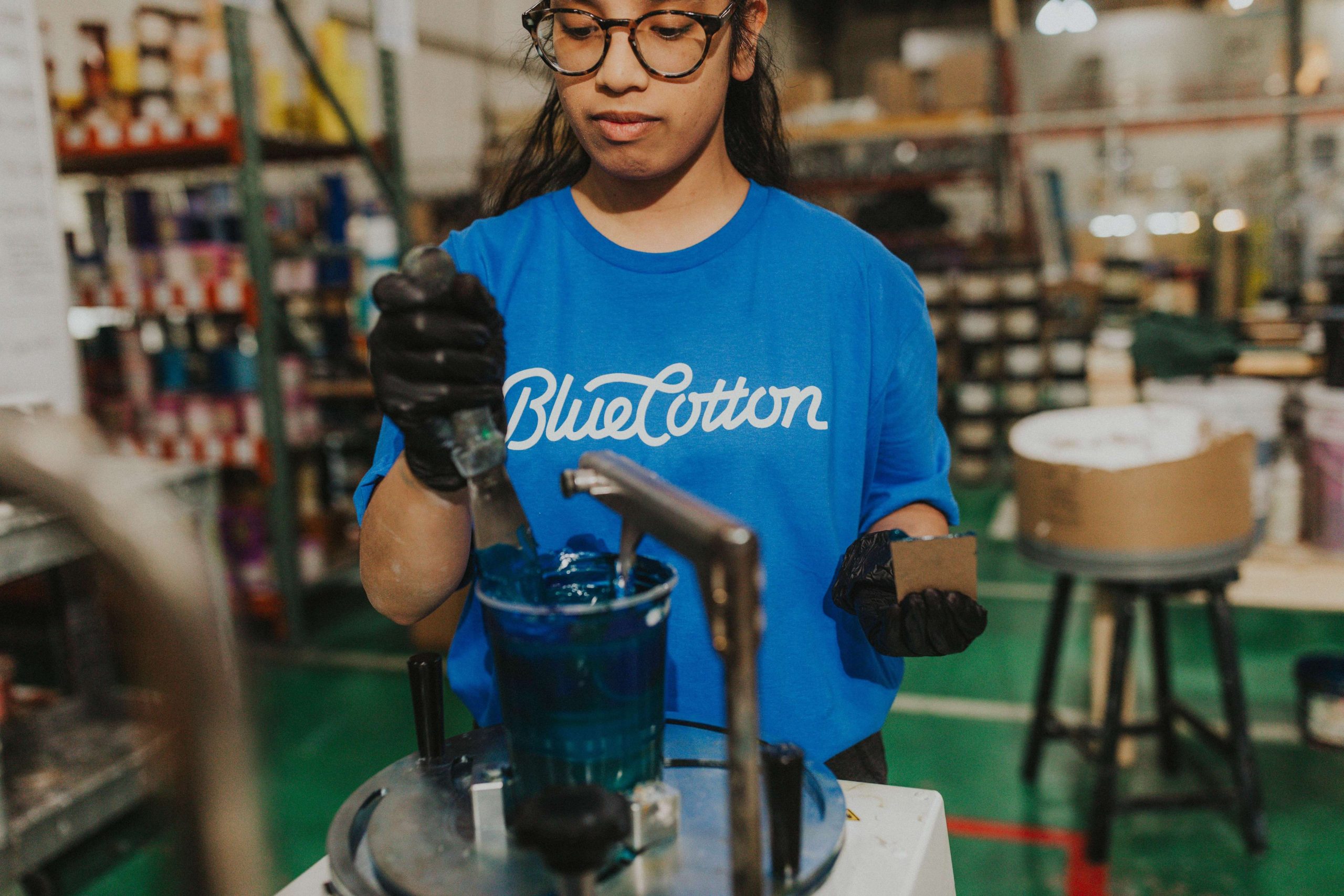
It usually helps to start with the fabric, not the ink. From there, the pairing tends to narrow itself down pretty quickly once you think about how the shirt will actually be used.
- If comfort is the priority, 100% cotton with a lighter plastisol print or water-based ink is usually best. That combination tends to feel softer and settle into the garment over time instead of sitting on top of it.
- If you’re working with blends, especially something like a 60/40 cotton/poly, plastisol is still the safer option. It holds up well and keeps results consistent, as long as you account for dye migration on darker garments.
- For fleece or heavier garments, plastisol still tends to make the most sense. It has enough body to stay visible on textured surfaces, even if that means keeping designs a bit simpler.
- Polyester is where you need to be more deliberate. Standard plastisol can cause issues, so low-bleed or low-cure inks are usually the better route, especially if consistency matters across a larger run.
If you’re trying to balance comfort and durability, most of the time it comes down to restraint. As a guiding rule of thumb, lighter prints on stable fabrics tend to hold up better than pushing either extreme.