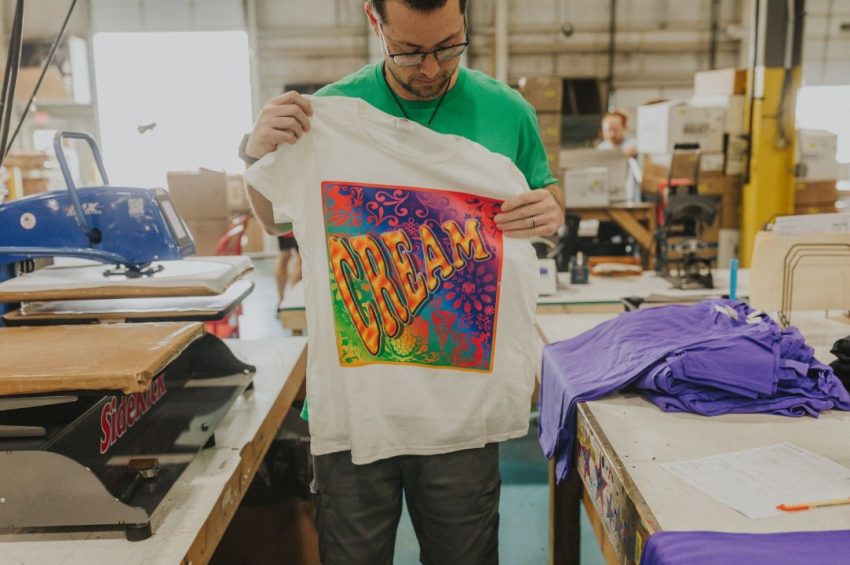
When you order custom t-shirts, sweatshirts, and hoodies, it’s important to think about the best printing method for your specific use case. This might seem unnecessarily technical, or something that only the printing company would have to worry about, but choosing the wrong method can result in a design that doesn’t look the way you envisioned. On our end, it might mean wasting time and money on a lengthy setup that isn’t appropriate for your actual needs — costs that are inevitably passed on to the customer.
The short answer is this: screen printing handles unlimited quantities but is limited by color count, while direct-to-film (DTF) printing can do unlimited colors but works best for smaller runs. So while screen printing remains the industry standard for most orders, DTF has carved out an important niche for specific use cases that screen printing simply can’t handle efficiently.
Understanding when to use each method means looking at your design complexity, order quantity, and even how you want the final product to feel and age over time.
Screen Printing: Process, Use Cases, and Limitations
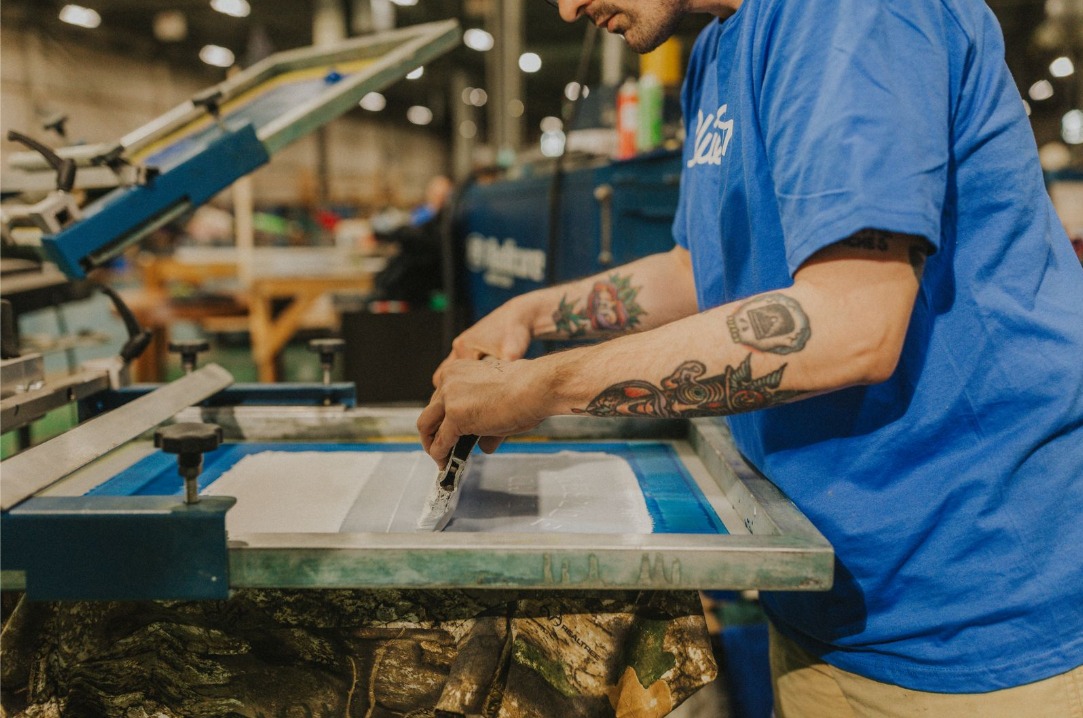
Screen printing has dominated custom apparel for decades. You may have heard of the term “silkscreen printing,” which dates back to when the mesh was actually made from silk — the industry has since moved to more durable materials, but the fundamental technique remains remarkably effective.
It works by giving each color its own dedicated screen, which means a 10-color design needs 10 separate screens prepared, aligned, and registered to each other. Together, these screens are inserted into the press, which uses squeegees to push plastisol ink through the screens and onto the fabric.
As you can imagine, setting the press up can easily take an hour or two, and for particularly complex designs, it might take nearly a full workday. This makes screen printing less efficient for smaller orders — imagine spending hours setting up 10 screens just to print five or six shirts.
However, once it’s set up, there’s no stopping it; screen printing thrives with high-volume production, which is why it’s used industry-wide for orders in the hundreds to thousands. At BlueCotton, our 18 automatic presses can produce about 600–700 shirts per hour, making it unbeatable for orders in the hundreds or thousands.
Screen printing is also remarkably versatile. Because it works on practically any material, we’ve applied it to T-shirts, sweatshirts, tote bags, blankets, bandanas — even leather labels for a whiskey company.
However, because you can only apply one color to one screen at a time (and since most presses only accept six to eight screens), screen printing’s biggest limitation is that it’s only feasible for designs with just a handful of colors. While complex multi-color techniques exist, they’re not practical for most orders. Most designs only use 4–5 colors, though we do have a 16-color press capable of more complex designs.
DTF Printing: Where It Shines and Where It Stumbles
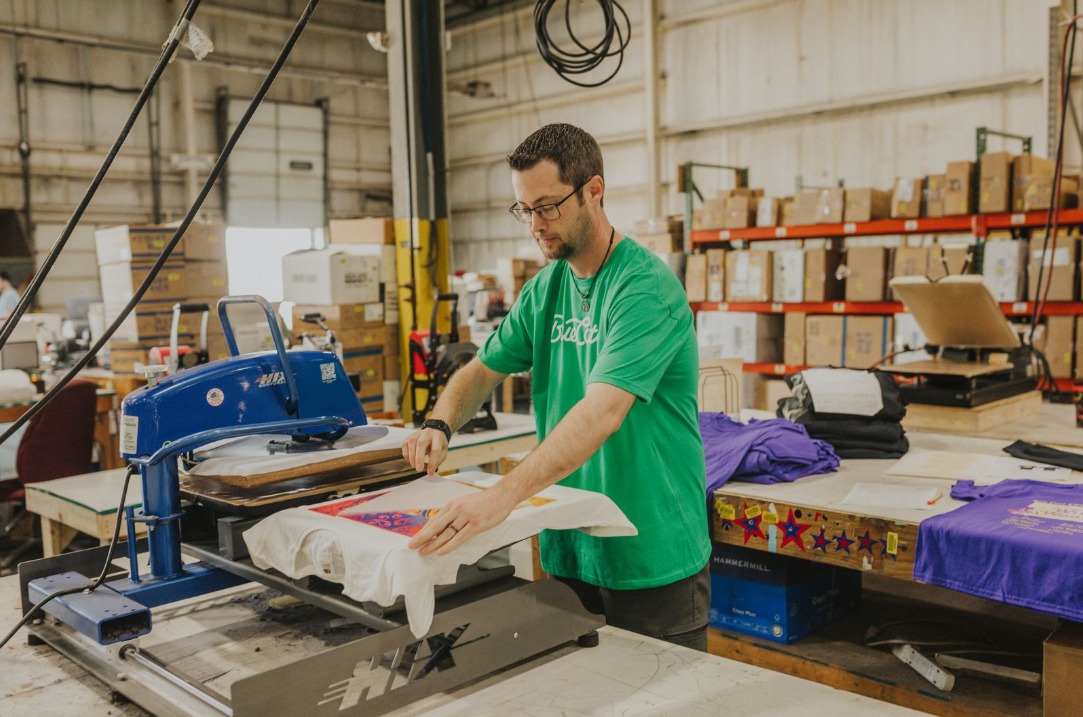
Direct-to-film (DTF) printing is accomplished by printing ink onto a piece of film (think the transparent sheets you’d insert into old overhead projectors) then laying the film on top of a garment. Subsequently, heat and pressure are applied to the film and garment, which transfers the image to the fabric. When the film is peeled away, the image that’s left on the fabric is 100% ink — compared to vinyl, which was used in older techniques. You may remember wearing shirts with vinyl names and numbers, which were uncomfortable and cumbersome because the vinyl image felt stiff or heavy.
Despite how complex your design might be, DTF orders only take about 10 minutes to set up and start printing. That’s because a lot of the manual work involved in screen printing is simply not necessary; there’s no press assembly, no screen setup… just printing to the film and applying it to the garment.
This makes DTF fantastic for very small orders that use lots of colors. But once you get past a couple of dozen units, DTF’s efficiency really starts to fall off. And for orders of hundreds to thousands of shirts? It’s simply just not worth it unless money really isn’t an issue.
How They Stack Up in Look and Feel
With screen printing, the ink will appear to fade or age as the fibers in the garment fray over time. While this look has appeal to many people, and while it also means that the garment becomes softer, it does mean a gradually lower-quality print. Direct-to-fabric ink, on the other hand, is a little different and won’t age at the same rate or in the same way that screen print ink does.
However, the most noticeable difference is not in the way the design looks but in the way it feels.
Screen print ink is more pliable than direct-to-fabric ink, which is why DTF designs tend to feel heavier and less natural than screen prints (depending on the design). This is one reason why screen printing is still overwhelmingly used compared to direct-to-fabric, even though DTF is still commonly used for complex designs with lots of colors.
Choosing Between Screen Printing and Direct-to-Film Printing
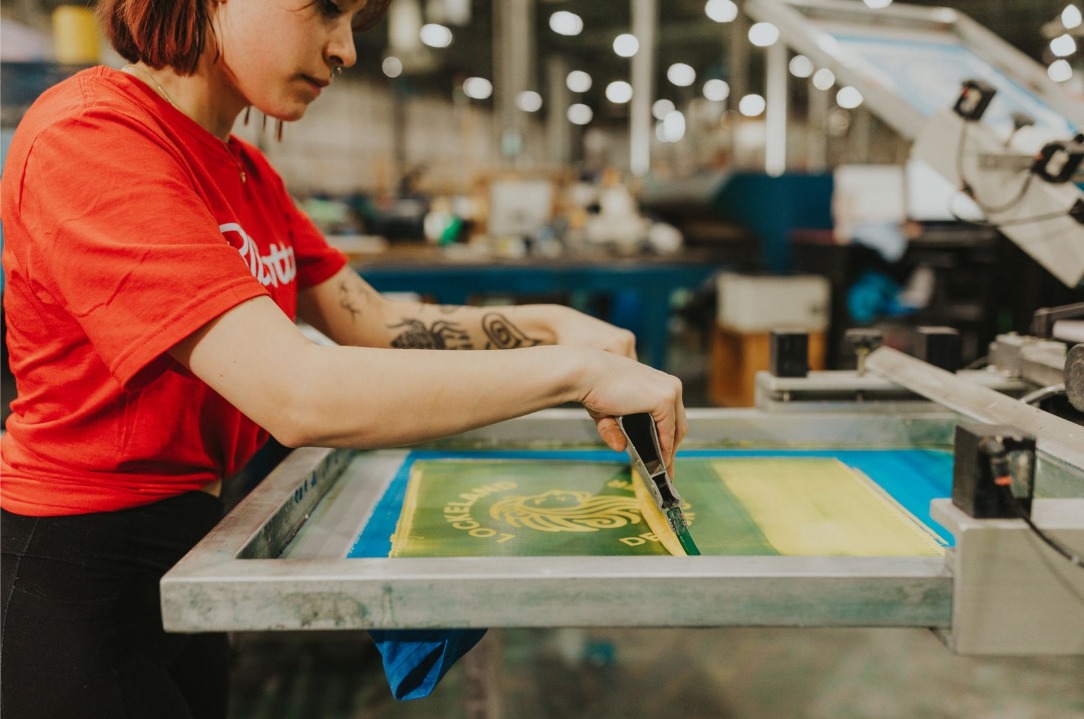
Choosing between screen printing and a method like DTF often comes down to order size — it’s not feasible to spend hours setting up a screen-printed design just to make five shirts, but it’s just as unwise to spend days producing a thousand DTF-printed units.
When costs are similar, the deciding factor often comes down to quality. At this point, the edge still goes to screen printing, but DTF has significantly closed the gap in recent years. In fact, many customers would probably not even see an immediate difference in quality.
We use both methods at BlueCotton, depending on the number of colors needed and the quantity of shirts requested. There’s a place in the industry for both methodologies; it just depends on what you’re looking for!