Custom printed apparel can take several different forms. For example, shirts are commonly screen printed, but you’ll also see direct-to-garment (DTG) printing, direct-to-film (DTF) printing, and sublimation printing.
Sublimation printing is an interesting method because it allows for full-garment coverage and specialty use cases. However, it has its limitations compared to traditional screen printing, and there’s a reason why we go with the latter.
With that in mind, let’s go over their differences and use cases.
At a Glance
| Screen Printing | Sublimation | |
| Soft-fabric feel | Good | Excellent |
| Durability | 50+ washes | Forever |
| Cotton or cotton blends | Excellent | Impossible |
| Size of the image | Limited to 12×16 inches | Unlimited |
| Number of colors | Limited to 16 or fewer | Unlimited |
| Large production runs | Unlimited | No |
What Is Screen Printing?
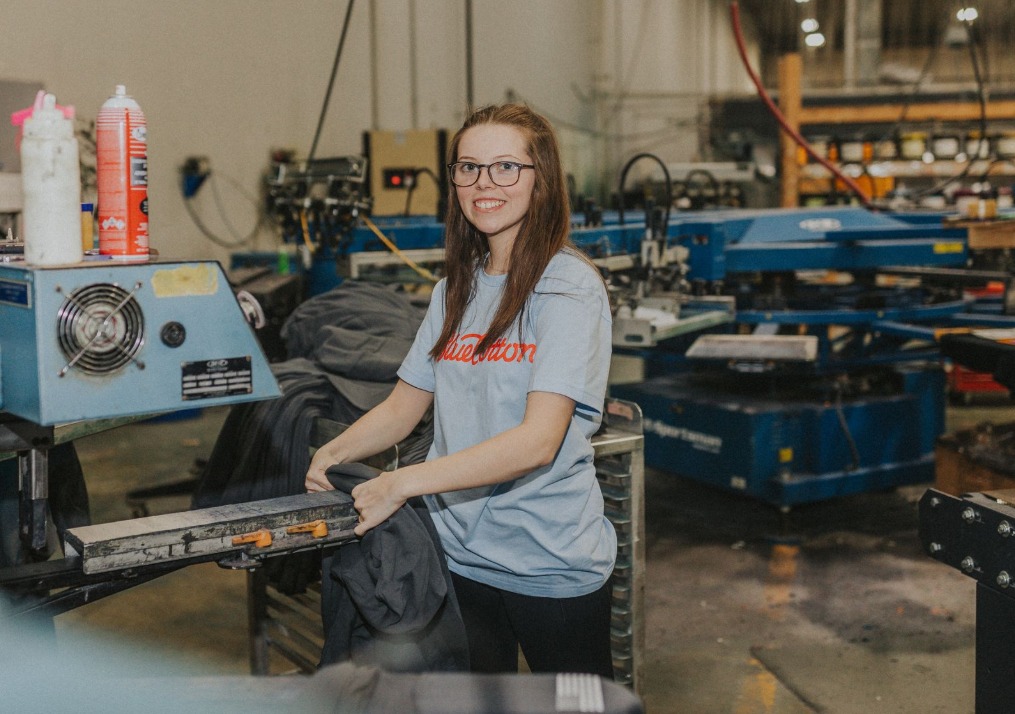
Screen printing is the process of pushing ink through a mesh stencil onto a garment, and then using heat to cure the ink to the garment. With screen printing, the ink actually sits on top of the material rather than absorbing into it. The result is a durable garment that retains its high-quality look for a very long time.
It should come as no surprise, then, that screen printing is the most popular method for custom apparel printing. It’s been used for decades, and it’s where the term “silkscreen printing” comes from (the screen mesh was originally made from silk).
We don’t use silk mesh any longer and instead rely on more durable, polyester materials, but the gist of screen printing has largely been unchanged — and for good reason. It’s very versatile, and it can be used on practically any garment, including T-shirts, tote bags, sweatshirts, and jackets.
Use Cases and Limitations
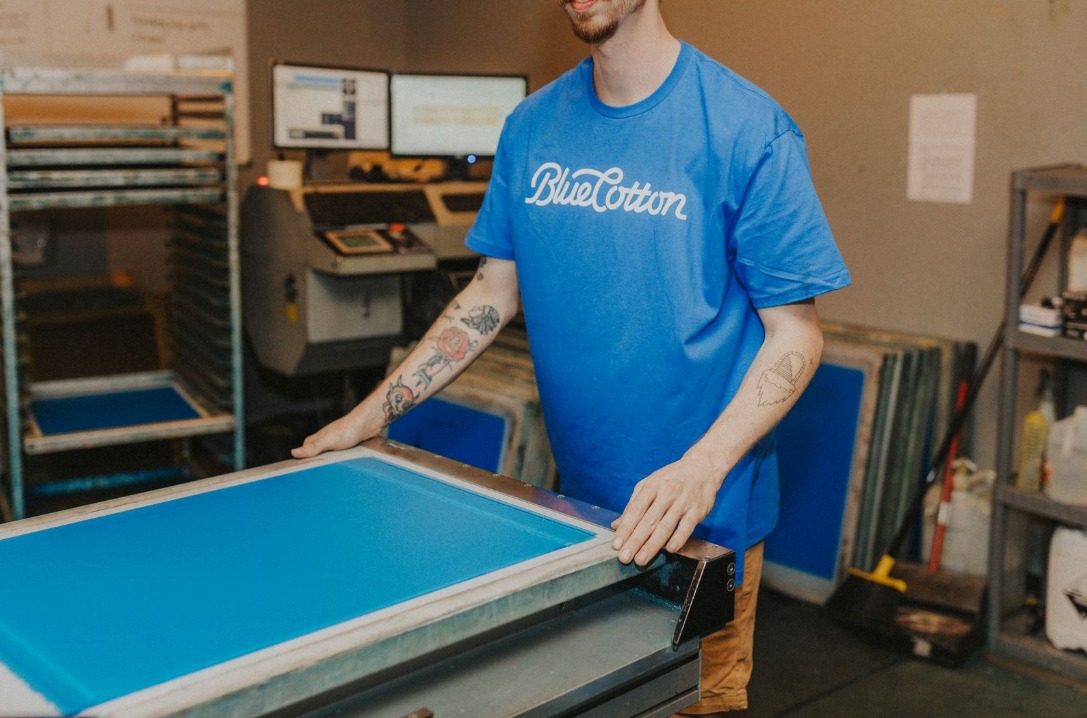
Screen printing is best suited for custom designs that have a limited number of colors, and it’s typically used when the design is constrained to the front/back of a garment.
One of screen printing’s biggest limitations is the printable area — most screen print presses restrict the size of the image that can be printed to 12 inches wide by 16 inches tall, although there are occasional exceptions. That’s why we typically just print on the front of a garment, the front-left chest, the back, or perhaps a sleeve from time to time.
It’s also important to note that each ink color in the design requires a separate screen in the press, which means it’s also a limiting factor (depending on how large your screen printing presses are). Many presses will only hold six to eight colors, while a few can handle as many as 16 — including one of the presses at BlueCotton.
So, what do you do if you want to print an image all over an entire shirt? That’s where sublimation printing has some advantages.
What Is Sublimation Printing?
The process for sublimation is entirely different. It works by using disperse dyes under 400° in order to sublimate the dye (convert it to a gas). This allows the dye to permeate into the fibers of the garment, which means there’s no familiar cracking, peeling, or fading. Compared to the distinct feeling of screen printing, you can’t even feel the dye when it’s sublimated; it’s fully diffused into the material so that they’re one and the same. With this comes the added benefit of extreme durability — sublimation is permanent, never washes out, and will almost never fade.
With sublimation printing, there’s really no limitation to the size of the image or the number of colors that you want to print. That’s why you’ll often see teams and clubs choose this method so they can print across the entire garment with lots of loud colors.
Use Cases and Limitations
As good as this may sound, there are several limitations to sublimation printing. Most notably, it can only be applied to white, 100% polyester garments. Cotton will not accept sublimation, and neither will blends of cotton, poly, lycra, etc.
Furthermore, sublimation is not practical for large runs, and it’s really only used for smaller orders of maybe 10 or 20 units. However, it’s particularly useful for detailed, complex, or very large designs — factors that would worry a screen printer to death but are a cinch with sublimation.
Finally, sublimated colors tend to be a little more transparent than traditional screen print inks, though this is offset by the benefit of a never-fading design.
Why We Use Traditional Screen Printing
Sublimation is great if you have a very specific use case, but it’s seen as more of a specialty printing technique, and very few print shops in America offer it.
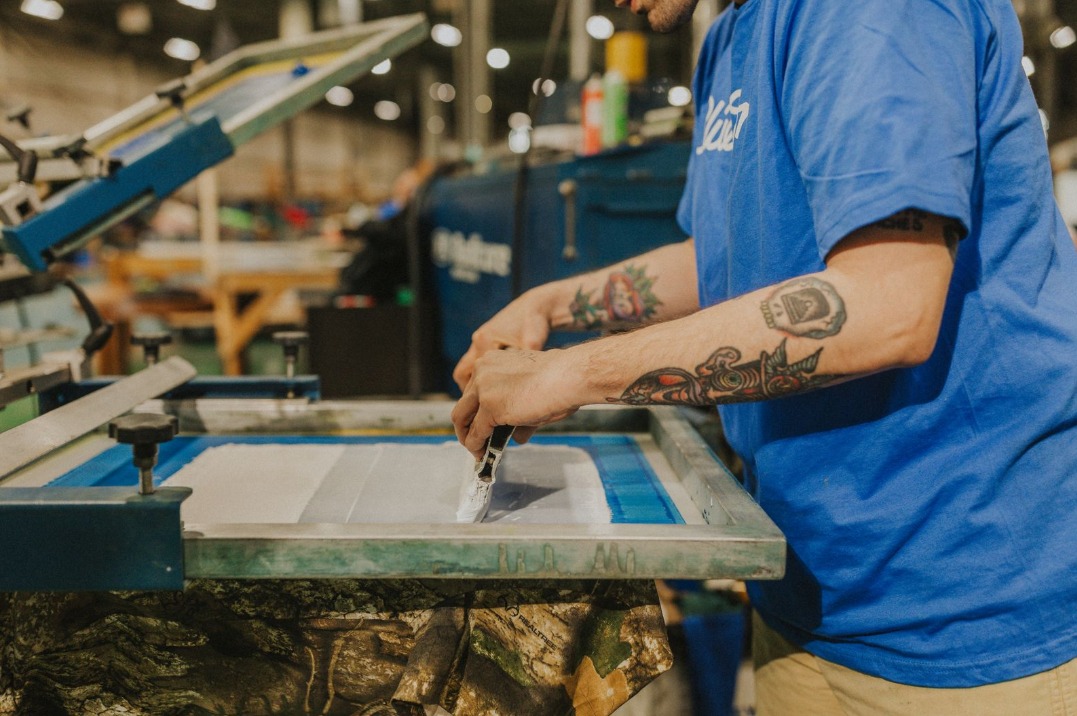
Traditional screen printing, on the other hand, is the go-to choice for the majority of custom designs. At BlueCotton, we have 18 screen printing presses that range from 6 colors, 8 colors, 10 colors — all the way up to a press that will hold 16 colors (most designs, however, are 4 or 5 colors or less). These automatic presses can print about 600–700 shirts per hour, which is why for orders in the hundreds to thousands, screen printing is second to none.