Ordering custom T-shirts sounds as simple as choosing a shirt, uploading a design, picking a quantity, and placing the order. But first-time buyers often discover that a few small decisions can make a big difference in the final result.
The most common problems tend to come down to preparing the artwork, choosing the right shirts and sizes, and managing the ordering process. Some mistakes can affect how the finished shirts look, while others can lead to unexpected costs/delays or a box of shirts that doesn’t quite match what you had in mind.
The good news is that most of these problems are easy to avoid when you know what to look for.
1. Not Paying Attention to the File Format of Your Design
The file type of your design affects how the artwork is processed and reproduced. Vector artwork (usually EPS, AI, SVG, and some PDFs) scales to any size and is generally ideal for logos, typography, and simple graphics because it doesn’t lose sharpness. Raster files (typically PNG, JPG, TIFF, etc.) are better suited to photographs and detailed illustrations — however, they’re composed of pixels, which means enlarging a small file will only blur the image.
Make sure you know before ordering which are the best file types for your custom T-shirt. When in doubt, you can check with our team whether your file is suitable.
2. Using a Low-Resolution Design
A design can look perfectly sharp on your phone or computer and still print poorly on a T-shirt. If it’s a vector, this isn’t as much of an issue, but if it’s a low-res raster image, the final result could be a blurry mess. So if you have access to the original design file, use that version instead of a screenshot or a downloaded image from a website.
For raster artwork, we recommend 300 PPI at the final print size (if your design will be printed 10 inches wide, the file should be 3,000 pixels wide). Preparing the artwork at its intended print size helps ensure it contains enough detail for a sharp print.
3. Designing Without Considering the Shirt Color
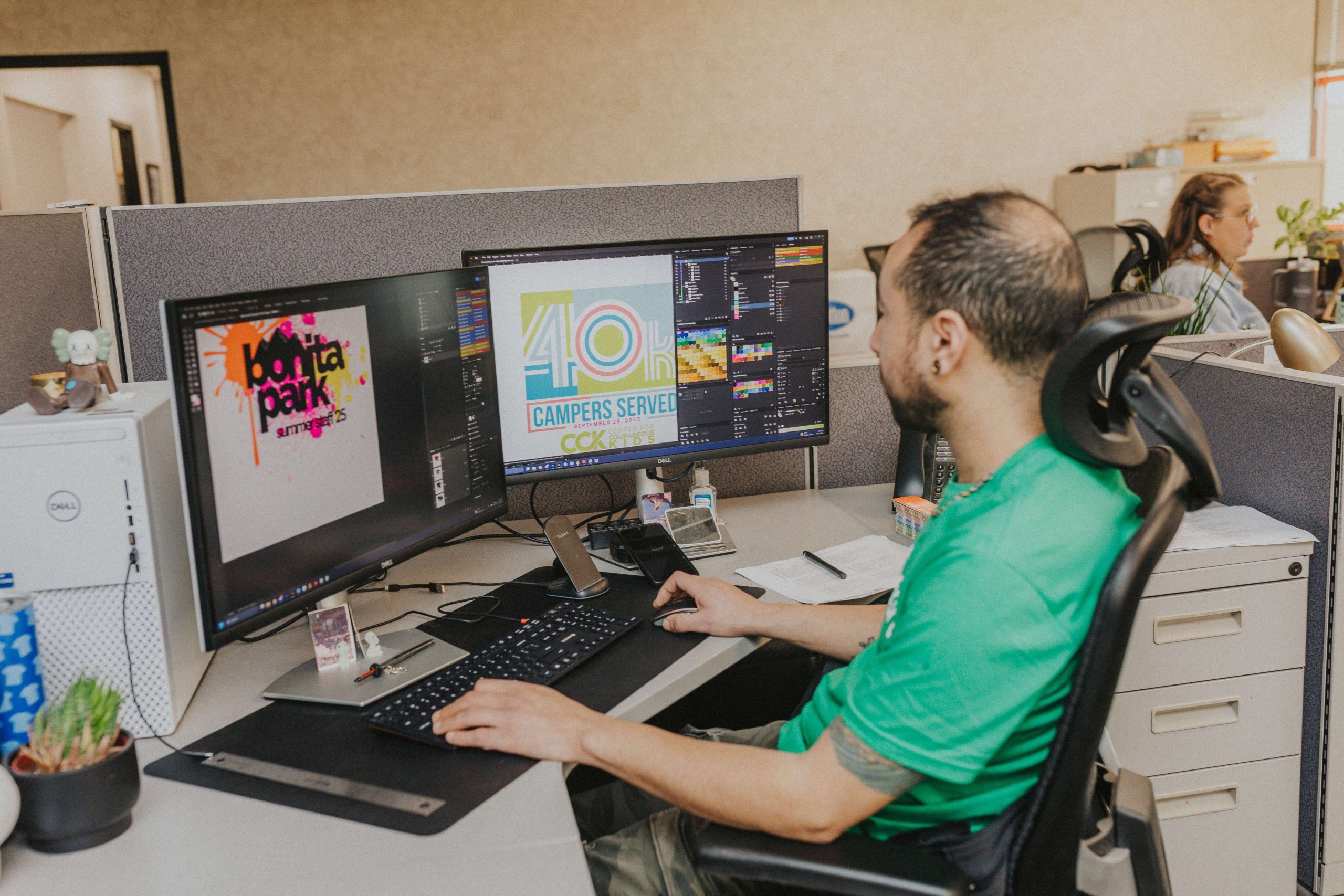
It’s easy to forget that the garment is actually part of the overall design. A design that looks great on a white background can look completely different on a navy, black, or other dark-colored shirt.
So be mindful when choosing a shirt color, and think about whether your design has enough contrast to be readable or whether any colors in the artwork will visually blend into the fabric. This is particularly important for logos and text — if the main message becomes difficult to read from a few feet away, changing the shirt color or adjusting the artwork may make a bigger difference than adding more design elements.
4. Trying to Fit Too Much Into the Design
First-time custom shirt buyers sometimes treat the front of the shirt like a small poster, adding logos, slogans, websites, phone numbers, event dates, sponsor names, social media handles, and several illustrations. Unsurprisingly, the result can be difficult to read and visually crowded.
A strong shirt design usually has a clear focal point. Put simply, decide what you want someone to notice first, then build the rest of the design around it. If there’s a lot of information that absolutely needs to be included, consider whether some of it belongs on the back of the shirt or in a different location.
5. Forgetting to Review the Mockup
A design that looks large on your computer screen may actually be fairly small (or aggressively oversized) on a shirt.
So, before ordering, don’t forget to review the mockup carefully, on various sizes if possible. Check the actual dimensions of the print area and think about whether your design has enough (or too much) room. This matters especially when you’re printing a design with small text or fine details.
6. Choosing a Shirt Based Only on Price
The cheapest blank shirt is not automatically the best choice for your project.
Different shirts vary in fabric, weight, fit, construction, color selection, and overall feel; a basic lightweight shirt may be perfectly appropriate for a one-day event, while a business ordering employee shirts or a group selling merchandise may want something more substantial or comfortable for repeated wear.
So think about how people will use the shirts. Are they for a single fundraiser? A sports team? Employee uniforms? A family reunion? Merchandise that people will hopefully wear for years? Your answer should influence which garment you choose.
7. Mixing Up Shirt Quantities and Sizes
The size breakdown can become quite complicated when ordering for a group. Add different shirt colors or styles, and it becomes easy to enter the wrong quantity somewhere.
One common mistake is collecting everyone’s sizes informally and then trying to reconstruct the final quantities when it’s time to order. If you’re ordering for a team, organization, school, or event, it’s helpful to create one master list and have each person submit their name, size, and any other relevant information directly through an online form. This gives you a single source of truth instead of a collection of texts, emails, and notes.
Before placing the order, add up every size and color combination and make sure the totals match the number of people who need shirts. Some groups choose to order a few extras in commonly requested sizes, particularly for events where people may need replacement shirts or additional attendees may show up.
8. Not Accounting for Size Variance
Even if you know exactly who needs what size, it’s easy to forget that a medium isn’t always a medium.
So always check the size chart for the specific garment you’re ordering. It’s also helpful to look at reviews of the specific shirt to see if it tends to fit smaller, larger, or true to size. For group orders, make a simple size list before submitting the order. Include every size and color combination separately so you can catch mistakes before production begins.
9. Forgetting About Different Fits and Preferences
Not everyone you order for will want the same type of shirt. Some people prefer a traditional unisex fit, while others may want a more fitted or lightweight style.
Offering multiple garment options can sometimes make sense, although adding styles or colors can complicate the order. If simplicity and consistency are priorities, choose one versatile garment and make sure everyone has access to its measurements before submitting sizes.
10. Ignoring the Cost Impact of Design Choices
The shirt itself is only one part of the price. In general, the number of ink colors and number of print placements can affect the cost. Printing on both the front and back, for example, generally costs more than decorating a single location.
If you’re working with a limited budget, get the pricing information before finalizing an elaborate design. You may be able to save money by simplifying the number of colors or reducing the number of print locations while keeping the overall design intact.
For an accurate quote based on your quantity and decoration method, use our Quick Price tool on product pages.
11. Waiting Until the Last Minute to Order
If your shirts are for a race, conference, school event, wedding, fundraiser, company gathering, or other fixed-date occasion, work backward from the date you need them. Leave time for choosing the shirt, collecting sizes, finalizing artwork, reviewing the proof, placing the order, and receiving the shipment.
We offer standard and expedited production options, including 5-, 3-, and 1-day options for eligible orders. But even when a rush option is available, it is better to avoid building your entire schedule around the fastest possible turnaround. A last-minute order leaves less room to fix an incorrect size list, change artwork, or reconsider a garment choice.
12. Forgetting to Account for the Artwork Review
Submitting an order is not necessarily the end of the design process; your artwork may need to be reviewed, adjusted, or clarified before production. And if the design has an issue, you want to discover it while there is still time to make a change.
So give yourself enough breathing room to review the final design carefully. Check spelling, dates, logos, phone numbers, URLs, and other details that would be expensive to correct after printing.
For particularly important orders, try to have another person review the artwork as well — a second set of eyes can catch an issue that you’ve stopped noticing after looking at the same design repeatedly. At BlueCotton, we include a free design review by an artist with your order.
13. Assuming You Can Make Changes After the Order Is Placed
Once an order has entered production, changes may become difficult or impossible.
This is particularly important with rush orders. Our Shirts In A Day service, for example, moves into production immediately after ordering, which means it requires completed designs and does not allow time for design edits or order changes.
So before clicking the final order button, take a few minutes to verify the garment, color, quantities, sizes, print placements, artwork, and shipping information. That final check can often prevent unexpected mistakes.
14. Not Checking the Minimum Quantity
First-time buyers sometimes assume they can order exactly as many shirts as they need — including a single shirt. However, most vendors will have a minimum order quantity (at BlueCotton, we have a six-piece minimum).
If you’re ordering for a small group, check the minimum before spending time finalizing the artwork and garment selection. If you expect to need additional shirts later, it can also be useful to ask about the process for reordering the same design.
A Simple Checklist Before You Order
Before submitting your first custom T-shirt order, run through this checklist to make sure you got the essentials covered.
- Artwork: Is the file resolution high enough for its final print size?
- File type: Are you using the best version of the artwork available?
- Design: Is the artwork easy to read on the selected shirt color?
- Print size: Have you checked the mockup and the actual dimensions of the print?
- Garment: Does the shirt’s fabric, weight, and fit make sense for how it will be used?
- Sizing: Has everyone checked the size chart for the exact garment?
- Quantity: Does your size breakdown match the number of shirts you actually need?
- Cost: Have you checked how colors, print locations, garment choice, and quantity affect the price?
- Proof: Have you checked spelling, dates, logos, and other details?
- Timeline: Do you have enough time for production and delivery?
- Final order: Have you reviewed every detail before submitting?
Make Your First Order Easier
When you’re ordering custom shirts for the first time, the goal is to enjoy the process and end up with shirts that look exactly the way you envisioned from the start. But most custom T-shirt ordering mistakes happen because a decision is rushed or because one part of the process gets overlooked. Taking a little extra time before ordering can prevent problems that are much harder to fix once the shirts are in production.
Start with the artwork, and make sure it’s prepared at the right size and resolution. Choose the shirt based on what people will wear it for, and use the specific size chart rather than guessing. Build your quantity list carefully, check the price before committing to the final design, and give yourself enough time to review everything before the event date.